

The quick version
If you don’t have 12 minutes, here’s the short version:
- What a tagline is: A tagline is a short, memorable phrase that captures what your brand stands for.
- Tagline vs slogan: A tagline is your brand’s permanent phrase (e.g., Nike’s “Just Do It”), while a slogan is for a temporary campaign or product (e.g., “Find Your Greatness”).
- The distinctiveness gap: Only 6% of taglines are instantly linked to their brand. To beat the odds, use sound or rhythm, your brand name, or unexpected words.
- Tip: If your name is functional (Airbnb), go emotional (Belong Anywhere). If your name is emotional (Hinge), go functional (Designed to be Deleted).
- The secret is consistency. A good tagline you use for years will do more for your brand than a perfect one you keep changing.
Further reading
Do you need inspiration before you start? My article 50+ tagline examples that stood the test of time is a good place to look.
What is a tagline?
A tagline is a short, memorable phrase that captures what your brand stands for. It boils your core idea down to a handful of words, so people can quickly understand what your brand represents and why it matters.
Some of the most influential phrases in business are only a few words long—for example, “Just do it,” “A diamond is forever,” or “Think different.”
You instantly know the brands behind them, even without seeing a logo. That’s what a great tagline does. It makes your brand easy to remember, instantly recognisable, and unique—even when your brand name isn’t visible.
Tagline vs slogan: what’s the difference?
Taglines and slogans often get confused, but they’re not the same thing. Both should be memorable, but each has a different job.
A slogan is tied to a specific campaign or product. For example, Nike has used slogans like “Find Your Greatness,” “Unlimited You,” and “Believe in something. Even if it means sacrificing everything,” for individual campaigns, but only “Just Do It” is their tagline. It’s been there since 1988, and it hasn’t changed.
A tagline is for the long haul. It should outlast any single product or campaign.
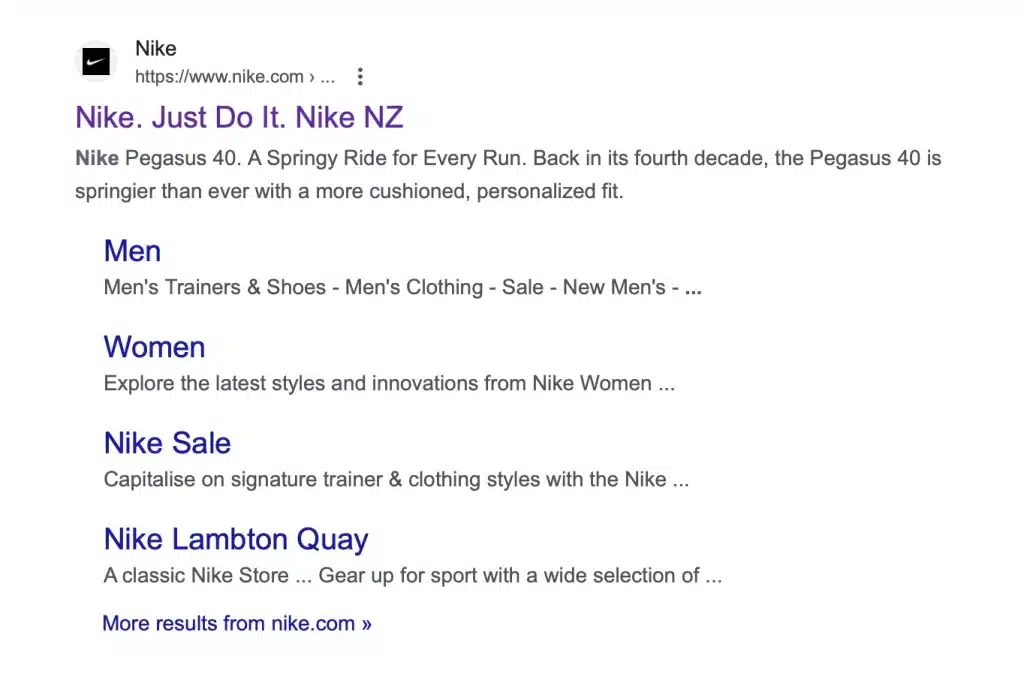
Nike places its tagline everywhere—in ads, on packaging, even in search results. And that’s why, over time, it became part of the brand itself.
You’ll also hear strapline—mostly in the UK, motto, or catchphrase for the same idea. And in German-speaking markets, the standard term is Claim.
Does every brand need a tagline?
Not every brand needs a tagline. But there are several good reasons to consider one.
To establish the brand name
A tagline can help people connect with your brand from day one. Take Mevo, a car-sharing brand in New Zealand. Their tagline, “Go with Mevo,” appears on every car and helps people quickly understand that the brand’s about transport.
To add an emotional layer to a functional, descriptive name
Airbnb’s name is pretty functional—it stands for air bed and breakfast. Their tagline, “Belong anywhere,” adds the emotion the name lacks and turns the brand from just a booking site into an experience.
To add a functional explanation to an abstract, emotional name
The dating app Hinge is a good example. The name suggests connection, but the tagline, “Designed to be deleted,” tells you exactly what the app promises you.
To tie all your campaigns together
Guinness has run all sorts of ads over the years, but “Good things come to those who wait” ties them all together. It works because it’s based on the simple truth that Guinness takes longer to pour.
To set yourself apart
Audi, Volvo, and BMW are all car brands, but their taglines make their differences obvious: technology, safety, and the joy of driving. A tagline is one of the quickest ways to show what sets you apart.
That said, if your brand name or your visuals and brand identity already do that work for you, a tagline might not add anything.
It’s worth asking whether it would really help or just get in the way. And I mean genuinely in the way. Getting a tagline to land takes time and consistent exposure. It doesn’t happen overnight, and someone has to pay for it.
Look at your goals, your audience, and your brand strategy. That will tell you if a tagline is worth it.
Your brand name tells you what the tagline should be. Bose says nothing about sound or technology, so “Better sound through research” communicates the brand’s promise. Dollar Shave Club needs no explanation, because it explains the product and its promise in three words. In that case, the tagline’s job is to add personality: “Shave time. Shave money.”
So look at your name first. Your tagline should add what the name can’t say, not repeat what it already does.
Further reading:
You can find out more about the benefits of a tagline here.
Characteristics of a strong tagline
What separates the forgettable from the iconic taglines? Most strong taglines share a few things in common:
- Honest—It makes a claim the brand can actually back up. “We try harder” (Avis) worked because they were number two behind Hertz. “Probably the best beer in the world” (Carlsberg) is honest because they admit there might be better beers out there.
- Unique—It links so closely to your brand that it couldn’t belong to anyone else. “Shave time. Shave money.” (Dollar Shave Club) is a good example. It’s about razors, it signals they’re cheap, and it’s delivered in their cheeky, irreverent voice.
- Memorable—It uses sound or rhythm to stick in the brain, but sometimes it’s the wording itself that does the work. “A diamond is forever” feels almost poetic, which makes it easy to recall after hearing it just once or twice.
- Clear—it communicates something specific, not just a vague feeling. “Eat fresh” (Subway) tells you exactly what the experience is about—fast food that’s actually fresh.
- Timeless—It doesn’t rely on trends that will date. “Finger lickin’ good” (KFC) has worked since 1956 because it stays true to the product, not the era.
- Versatile—It works everywhere. “Just do it” (Nike) works for a marathon runner or a beginner, on a massive billboard or a shoe box.
What makes a tagline work?
Those characteristics are a good starting point. But knowing what a great tagline looks like and knowing how to make yours land in people’s minds are two different things.
Jenni Romaniuk’s research on Distinctive Brand Assets gives more specifics about taglines. Her work examined what makes a tagline connect with a brand in people’s minds and found that most taglines fail to achieve strong brand linkage.
A separate global study by Ipsos and JKR tested over 5,000 brand assets across 25 countries and put a number on strong brand linkage.
They found that only 6% of slogans and taglines reached gold status—meaning they were immediately and uniquely associated with their brand. Most others were average or barely noticed.
You can explore the full findings at Be Distinctive. Everywhere.
The challenge is that taglines are words, and words already have meaning associated with them.
Also, your tagline isn’t just competing with other brands, but with your own brand name, since both are processed in the same parts of the brain.
So, if you try to pack too much meaning into a tagline, it can end up working against you.
How to make yours more distinctive
But that doesn’t mean you should skip a tagline altogether. There are a few ways to make yours stand out:
- Sound and rhythm. Taglines with a musical or rhythmic quality are more likely to be remembered and linked to a brand. McDonald’s “ba-da-ba-ba-baa” does as much work as the words themselves.
- Your name in the tagline. Including the brand name strengthens the association. “Maybe it’s Maybelline” works partly because you can’t say it without saying the name. Once recognition is established, the name may be dropped—but it helps early on.
- Unusual or unexpected words. Familiar words blend in. Unexpected ones stand out. “Wiiings” in Red Bull’s tagline is technically a typo, but a distinctive one.
- A question. Questions create a small moment of mental participation that makes the tagline stick longer.
Interestingly, rhyme and length were found to have little effect on whether people link a tagline to its brand. And a longer tagline can become just as distinctive as a short one. Still, shorter is usually easier to remember at first.
Further reading
If you want to go deeper on this topic, my article on what makes a brand recognisable covers three research sources on brand distinctiveness—including Romaniuk’s work.
8 types of taglines
There’s no single right way to write a tagline. I’ve sorted them into eight common types. While most taglines fit more than one, knowing the difference can help you narrow down your approach.
- Descriptive taglines spell out what your brand does or offers. They work best when your brand name is abstract or doesn’t explain the product on its own. Think “Taste the rainbow” (Skittles), “Belong anywhere” (Airbnb), or “All the News That’s Fit to Print” (The New York Times).
- Inspirational taglines focus on the promise, not just the product. They speak to who you could become if you choose this brand—“Just do it” (Nike), “Because you’re worth it” (L’Oréal), “Think different” (Apple).
- Humorous taglines use wit to create a positive feeling about the brand. The key is that the humour feels genuine, not forced. “Maybe she’s born with it. Maybe it’s Maybelline” (Maybelline), “Nothing runs like a Deere” (John Deere), and “Shave time. Shave money” (Dollar Shave Club) are some examples.
- Provocative taglines challenge or take a strong position. They work because they show the brand has a point of view and isn’t afraid to show it. “Designed to be deleted” (Hinge), “Democracy dies in darkness” (The Washington Post), “What happens here stays here” (Las Vegas), and “Betcha can’t eat just one” (Lay’s) are examples.
- Brand essence taglines capture what your brand stands for at its core. They can work in any industry, but they have to be spot-on to avoid sounding generic. “A diamond is forever” (De Beers), “Further” (National Geographic), and “Good things come to those who wait” (Guinness) are all examples where the line and the brand feel inseparable.
- Competitive taglines position the brand directly or indirectly against the competition. They work best when there’s a real, provable difference to highlight. “We try harder” (Avis), “Probably the best beer in the world” (Carlsberg), and “There is no substitute” (Porsche) all make their point.
- Rhythmic and rhyming taglines use sound to make the line stick in your mind. “Melts in your mouth, not in your hands” (M&M’s), “The quicker picker-upper” (Bounty), and “Have a break, have a KitKat” (KitKat) are hard to say without feeling the rhythm.
- Call-to-action taglines are built around a verb and encourage you to take action. “Think Small” (Volkswagen), “Have it your way” (Burger King), and “Let’s go” (Hertz) all convince you without pushing too hard.
How to write a tagline that sticks
Are you ready to get practical? Here’s a step-by-step way to write a tagline that lasts.
1. Start with your brand and your audience
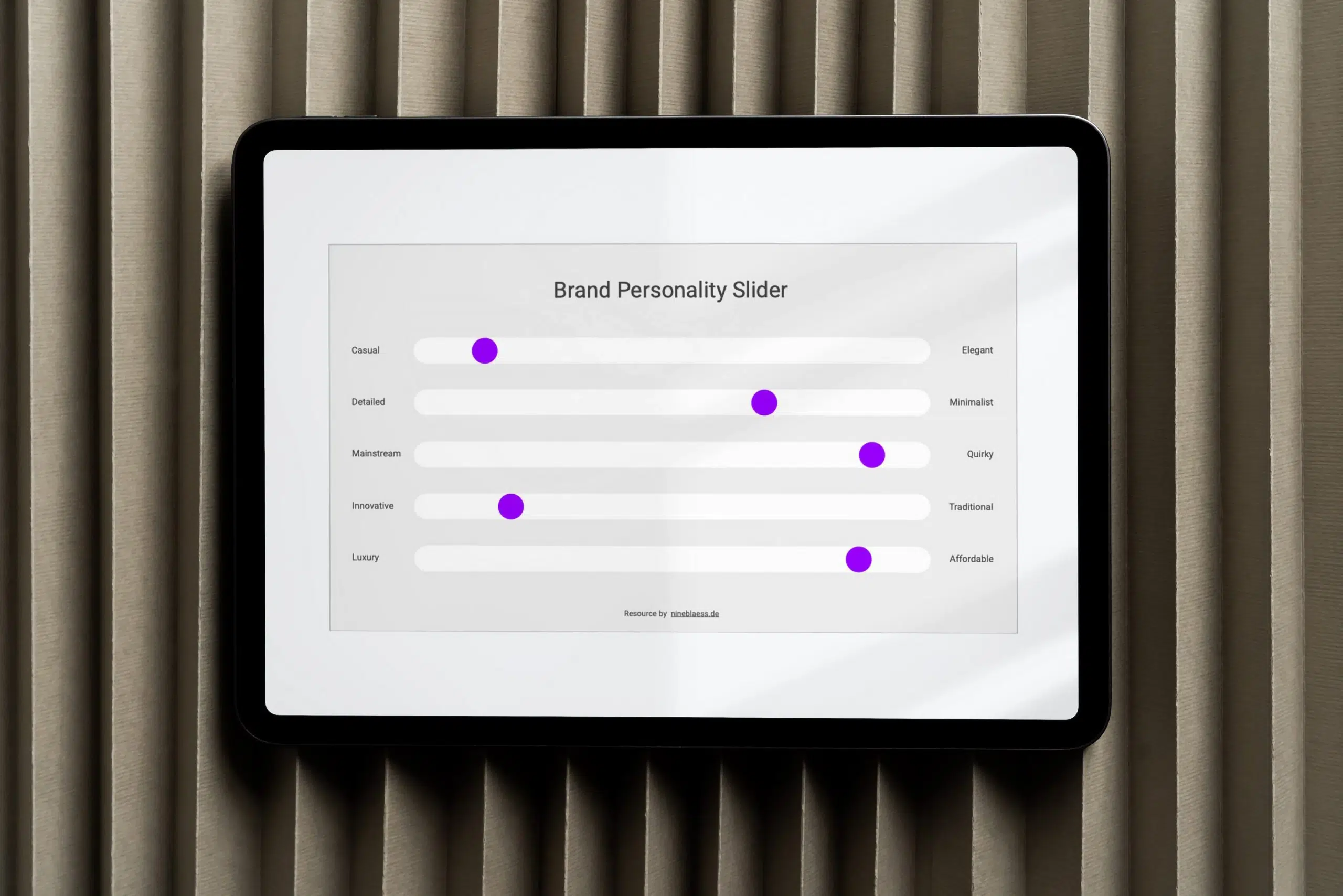
Before you start writing, you need to be clear about what your brand stands for, who it’s for, what sets it apart, and what its brand personality should be.
You can’t extract anything you haven’t defined beforehand. If you’re still working on your brand positioning, you should focus on getting that right first.
Once you’re clear on your brand, focus on your audience.
- What motivates these people?
- How do they talk in everyday life?
A good tagline doesn’t just describe your brand. It acts like a mirror. People read it and immediately think, “This has something to do with me.”
2. Generate a lot of options, then look for the unexpected
Don’t try to come up with the perfect tagline in your first draft. Write down 20, 30, or even 50 options. Whether they’re obvious, quirky, long, or short—write everything down that comes to mind. At this stage, quantity is more important than quality.
Then you can look for the examples that surprise you. The “safe” options will hardly stand out, but the unexpected ones have the potential to stick.
3. Play with language and length.
Now it’s time for the finishing touches. You might experiment with alliteration, rhythm, or wordplay—but only if it fits and doesn’t seem forced.
- Can you incorporate your brand name?
- Is there a word that feels fresh or unusual?
- Would a question work?
Most taglines are shorter than eight words. In fact, the average length of the tagline examples in this article is 4 to 5 words. But this is not a hard rule. If it helps you get your message across better, it’s okay to make it a little longer.
4. Test it out loud and on real people
A tagline has to work everywhere, written down and spoken aloud.
- Does it sound natural when you say it?
- Does it sound like something people would actually say?
Share your favorites with people outside your company, preferably people who match your target audience. But don’t ask them, “Which version do you like best?” Instead, be curious and ask, “What does this sentence trigger in you? What does it make you think of?”
And always remember that new things often take time to develop meaning. So don’t immediately discard a tagline just because it feels unfamiliar at first. It may be precisely this “strangeness” that ultimately makes it memorable.
5. Sit with your shortlist before you decide
Step away for a few days, then come back to your list. The lines that still seem right to you after this break are probably the strongest.
Once you have decided on a tagline—and before you go live with it—you should check whether someone else is already using it. A quick search in the national trademark register is a must. In Germany, this is the DPMA (German Patent and Trademark Office); in New Zealand, the IPONZ.
Trademark protection is realistic if the tagline is distinctive rather than merely descriptive. Generic phrases like “quality you can trust” won’t qualify. Copyright, on the other hand, rarely protects taglines; short phrases usually fall below its threshold.
If you take the protection of your brand seriously, talk to a trademark lawyer. Taglines can indeed be protected, and for larger brands, they absolutely should be.
When is a tagline finished?
There’s no perfect moment to call it done. But there are a few signs you’re close.
- It feels authentically like your brand, like it’s always been there.
- It leaves room for different campaigns without changing.
- And it’s short enough to work across different formats and channels; on a poster as well as on a 2-second radio slot.
If all three fit, your tagline is ready enough. The rest comes with time and repetition.
Rolling out a new tagline
A tagline only works if you use it everywhere, starting with your own team. Before you update your website or launch a campaign, make sure everyone knows what the tagline means.
Then put it everywhere your brand appears: your website, social media, email signatures, pitch decks, packaging, and ads. If you’re not consistent, you’ll miss the chance to turn it into a distinctive brand asset.
A note on global brands
If your brand works in more than one language or market, think carefully about translation.
Some taglines lose their punch when translated. Others stand out because they stay in the original language, like Audi’s “Vorsprung durch Technik”. If you’re going international, check your tagline for any hidden and unintended meanings.
If you’re a small business owner not sure where to start building your brand, my article on branding for small businesses might be a good start.
FAQ
Do small businesses need a tagline?
Not necessarily. When you’re early stage, there’s a lot else to focus on, and a tagline that hasn’t had time to build recognition won’t do much on its own.
That said, it can be worth considering if your offer is complex and needs simplifying, if your business name is functional and lacks emotion, or if you’re in a crowded market and need to stand out quickly.
What are the benefits of a tagline?
A good tagline makes your name easier to remember, adds an emotional or functional layer the name alone can’t convey, ties your campaigns together, and sets you apart in a crowded category.
The article goes into all of this in detail. Note the word good, though, as a weak tagline adds none of this, and in that case you might be better off without one.
How do I know my tagline is working?
There’s no single metric for tagline success, but a few things are worth tracking.
- Can people recall your brand name after they hear the tagline? (Brand recall)
- Do they associate it specifically with your brand, not just the category? (Uniqueness)
- Is it being used inside your company?
- And over time, do customers mention, or reference it?
Brand recall surveys can formalise this, but honest conversations with customers often tell you more.
Can I change my tagline later?
Yes, but the longer you stick with a tagline, the more equity it builds. Only change it if your brand direction has genuinely shifted, not because you’re bored with it.
Do I need to trademark my tagline?
It’s not legally required, but it’s worth considering if you’re serious about protecting it. Check your national trademark registry first to make sure no one else is already using it.
Where does a tagline go?
Typical places for a tagline are your website header or footer, your SEO title, social bios and your LinkedIn headline, email signatures, and packaging. Many brands also add it to a secondary logo version, which I don’t recommend as it gets illegible. A tagline is generally best placed where people meet your name without context.
Title image Kaboompics via Pexels