

So, you’re all set to get your website up and running. Maybe you’ve even got someone lined up to handle the design and another person for the copy, and you’re finally ready to get going. But then someone asks the crucial question: “What exactly is your website supposed to say?” And then you realise that you don’t have a proper plan. That’s why you hired the experts, right?
This is usually when the copy-versus-design debate starts. Should your designer wait for the words, or does your writer need a layout to work with? It’s a question that stalls plenty of projects before they start, but it misses the point. The real question is what you do before you think about either.
To explore this question properly, I’ve brought in Petra Smolčić, founder of Petra Designs and a UX speaker who’s built a community of over 8,000 designers on Instagram.
My background is in branding and emotional connection; Petra’s is in user experience and making complex digital systems feel effortless. We approach websites a bit differently, but we’ve arrived at exactly the same conclusion.
Why starting with design misses the point
For years, most people started with design. The designer would create a layout, then hand it over for the copywriter to fill in the blanks. It sounds efficient, but it’s actually backwards.
If you design before you know what you need to say, you’re guessing at things like headline space, mood, and how much room each section needs. Design isn’t just about looking good. It’s there to help people understand, feel something, and take action. When you try to squeeze copy into a layout that wasn’t built for it, something always feels off.
I used to think that was just a people problem. It’s not. It’s a process problem.
Copy without strategy gets stuck too
Switching the order doesn’t fix things either. If your copywriter doesn’t get your mission, your audience, or your positioning, they’ll be just as stuck as you are. And no amount of good design will make up for it.
Petra points out another piece most people miss. A website is a marketing tool, and copy, design and UX help it do that job.
So in short:
- Copy helps your ideal customer feel understood.
- Design builds trust and sets the mood.
- UX makes sure people can find what they need quickly and easily.
Leave any one of these out, and your website won’t do its job.
The best starting point is strategy
Before you write a single word or open any design tool, you need answers to the questions that decide everything else.
Your brand foundation—questions you should ask regardless of your website:
- What does this brand stand for?
- Who is your audience, and what do they already believe?
- What objections will they have to buying from you?
- Where does your brand sit relative to competitors?
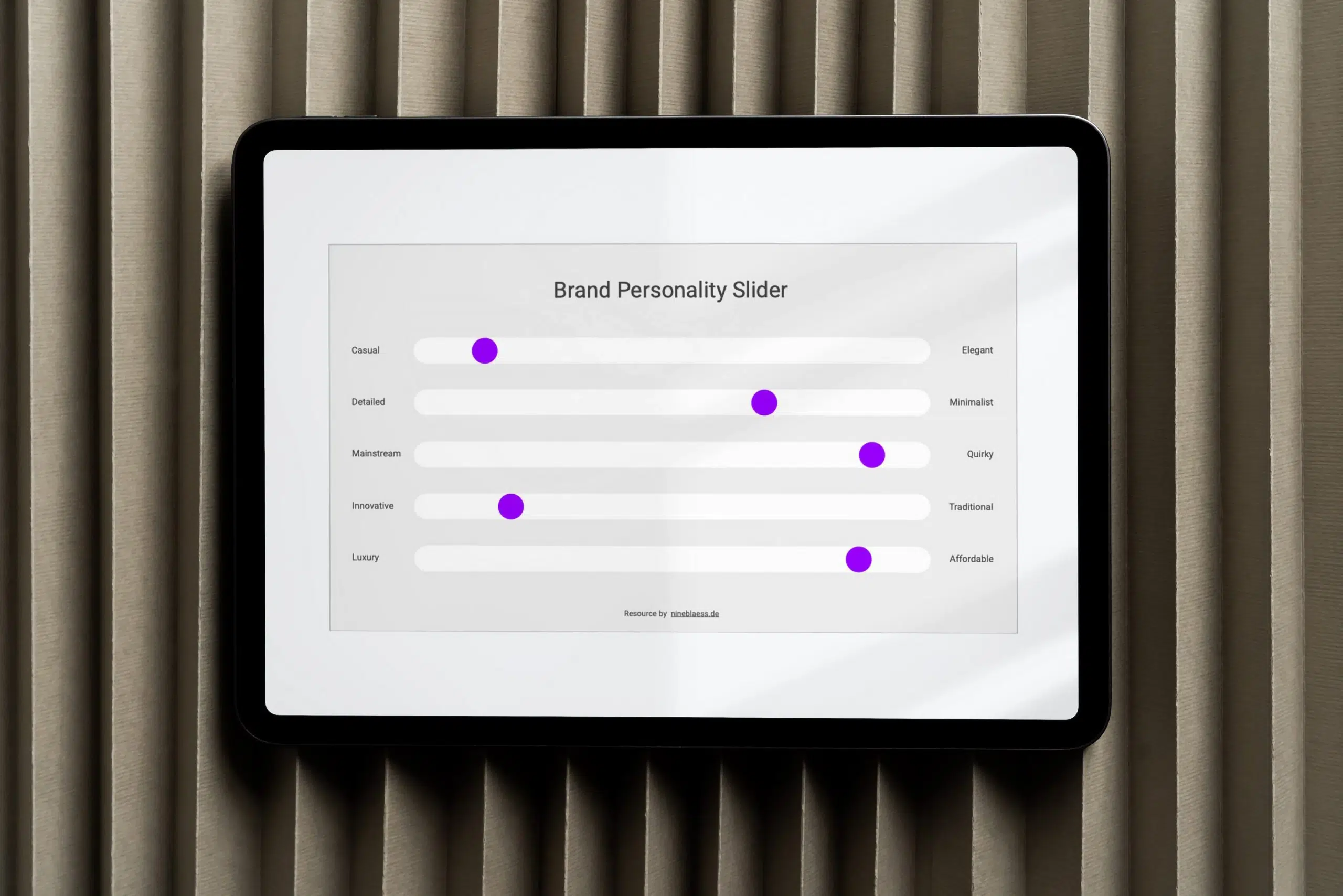
- What brand personality and mood should the site create?
On the website strategy side, Petra adds:
- What is the goal with the website? What are you trying to achieve with it—more leads, more downloads, building your reputation?
- What do you want visitors to do, feel, and think when they land on your site?
It sounds simple, but it forces you to get clear. A website without a real purpose is just digital clutter—and without measurable goals, you’ll never know if it was worth building in the first place.
Before either of us starts a project, we each run a strategy session. I dig into what makes your brand stand out. Petra maps out the user’s journey and spots where things might get stuck. Both give the writing and the design a clear direction.
You see, strategy isn’t a nice bonus. It’s the foundation for everything else.
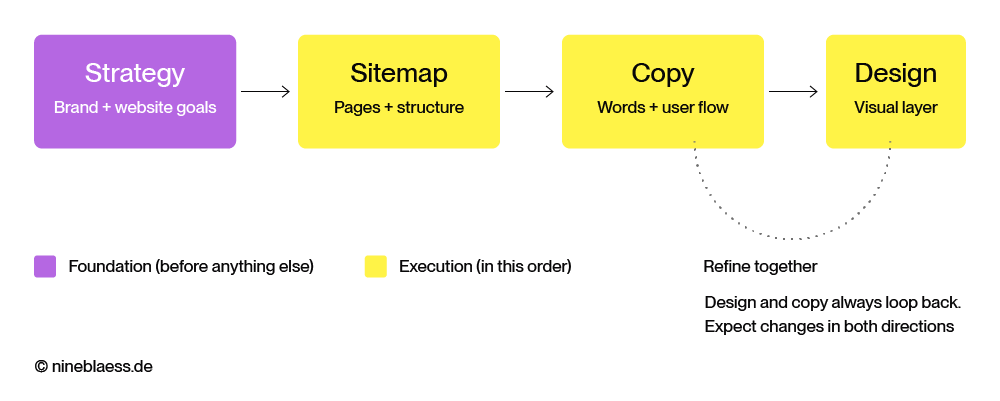
The workflow: Sitemap, copy, design, then back-and-forth
Once the strategy is in place, the order becomes straightforward:
- Start with the sitemap. Work out which pages you need and what each one is for. Petra also defines page types here—static pages for legal info, dynamic pages for blogs and case studies, and landing pages with sign-up forms. Thinking in templates now means your finished website is something your team can manage and update themselves.
- Next, focus on copy and user flow. I write the words in a Google Doc before touching any design tools, always thinking about your audience and what will move them to act. Meanwhile, Petra wireframes the main pages with draft copy in place, so the design supports the story the words are telling.
- Design comes last. Only then does the visual work begin, because now it has a foundation and a clear goal.
But this isn’t a one-way street. Design often reveals things you can’t spot in a document. A headline that sounds great on paper might be too long on the page. Copy that reads well in a doc can feel heavy when you see it laid out.
There’s always some back and forth, and that’s a good thing. It’s about making sure the words and visuals work together to create a seamless experience.
What this means for your website project
If you’re about to start building your website, here’s what you should do:
- Start with strategy. Get clear on who you’re talking to and what you want them to feel before anyone writes or designs a thing. If your designer or copywriter isn’t asking these questions, find someone who will.
- Write with intention and as if you’re speaking to one person. Your copy isn’t just there to fill space. It’s your chance to show people why they should choose you. Treat it like a personal letter to your ideal client, even if thousands read it.
- Expect to make changes along the way. Copy and design shape each other. Treat them as a team, not a checklist, and you’ll end up with something much stronger.
So, should you start with website copy or design first?
The answer is neither. First, work out your strategy and goals. Once that foundation is in place, copy takes the lead and design gives it structure. Then you refine both until the words and visuals work together and the experience feels effortless.
If you get this right, your website will become a marketing tool that works 24/7.
Do you want your website to work for you?
If you don’t want to develop your brand, copy, and design in isolation, but want everything to flow as a single, logical process—without the overheads of a big agency—this is exactly what I do. Check out how I work.
If you need a more complex UX/UI system, such as membership websites, web applications or a design system that combines it all, Petra Designs might be a better fit.
FAQ
Should I hire a copywriter or designer first?
Start with whoever does strategy first, whether that’s a brand designer, a copywriter, or a dedicated strategist. The title matters less than the process. Look for someone who asks questions before touching visuals or words:
- What does your brand stand for?
- Who are you talking to?
- What do you want people to feel and do?
Get that foundation right, then design and copy can work together.
Do I even need a website if I’m already on social media?
Yes, because social media and a website serve very different purposes. Social media builds awareness, but you don’t own it. A website is fully yours. You control the experience, guide people through the journey you want them to take, and decide exactly what they see, feel and do next.
Here are more reasons why your business still needs a website in 2026.
What makes a website convert?
A website converts when copy, design and UX work together toward the same goal. Copy speaks to the right person at the right moment. Design builds trust and guides the eye. UX makes sure nothing gets in the way. Get all three aligned, and your website starts doing the work for you.
Here are 11 tips to design a business website that converts.
How do I make my website feel like my brand?
Your website should feel like a natural extension of your brand—visually, in tone, structure and experience. That means using your brand colours, fonts and imagery consistently, but also writing in your brand voice and designing in a way that reflects your values. When it all comes together, visitors instantly get who you are.
Here’s how to create a branded website in more depth.
Title image by Teona Swift