

I get it. When you’re starting out, you don’t have the time or resources for a year-long naming process. You just want to get going. But if you pick a name before you know what your brand stands for, it obviously can’t do the job it’s supposed to do.
That’s why the best brand names—the ones people remember and that support your business growth—come after you’ve answered the hard questions. Let me show you how.
TL;DR
A strong brand name is short, distinctive, and available. But there’s more to it:
- The sound of your name shapes how people feel about your brand—often before they even know what you do.
- A great name can survive a business pivot, not just your launch day.
- The .com URL you want might cost $50,000.
Read on for everything you need to know about brand naming.
What a bad brand name might cost you
Before we get into what makes a strong brand name, let’s start with an example that shows what can go wrong.
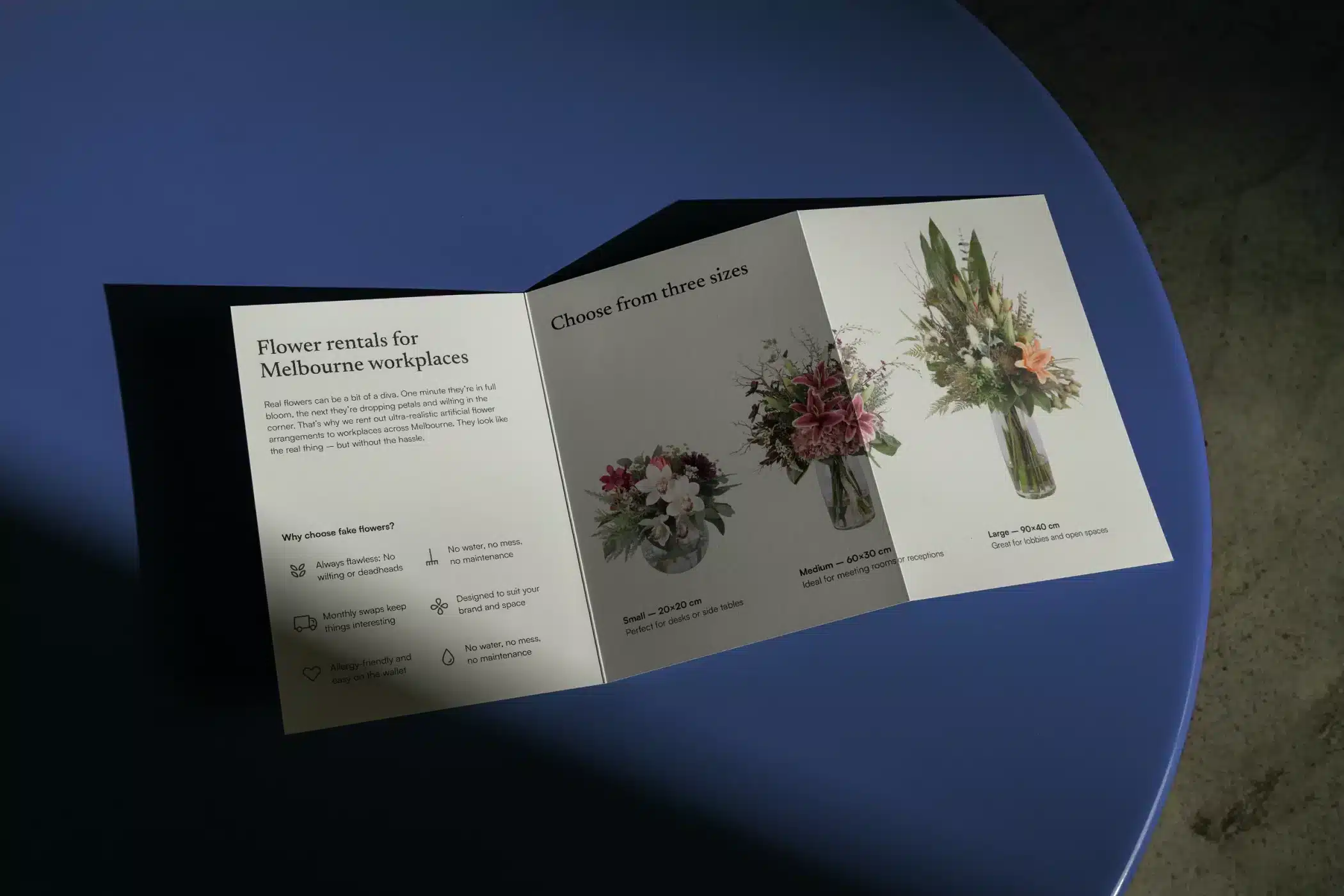
A good friend and client of mine runs a business renting artificial flower arrangements for workspaces. He wanted the name to say exactly what he does, so he registered Office Flower Solutions—and, like almost every founder I’ve worked with, he did that long before anyone asked what the brand was supposed to stand for. It’s very common and here’s what it cost him:
- It’s too long to remember and pass on. Who has the patience to write it out?
- It carries no emotion, which makes brand-building an uphill battle.
- It doesn’t scale visually. A long name is a nightmare to design with. Try fitting an “Office Flower Solutions” logo into an Instagram profile picture.
- It boxes the business in. Half a year in, he’s already delivering to retirement homes, medical centres, and event spaces, and the name doesn’t stretch that far.
- It limits the brand’s future. If he ever wants to expand beyond monthly rentals into styling services or event work, the name will work against him, requiring either an expensive rebrand or extensive marketing.
We didn’t rename the business. By the time I came on board, it was already registered and in use. So instead, everything else had to work harder.
We put a lot of personality into the tone of voice, introduced a secondary brand mark to work on a small scale, and made sure the brand colours and imagery did enough to bring warmth to a name that doesn’t naturally carry any, while still aligning with the more conservative name.
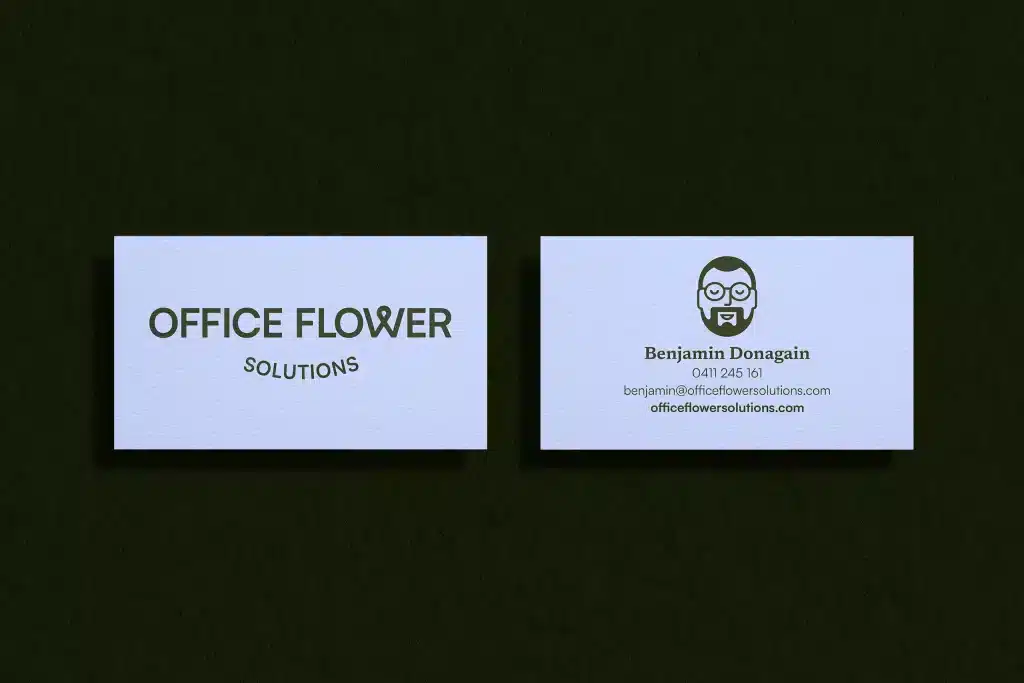
We made it work, but it was an unnecessary problem in the first place. You can view the Office Flower Solutions project here.
What makes a strong brand name? (Key characteristics)
A strong name has to do more than sound good. It needs to work on every level. While not every name ticks all the boxes, here’s what to aim for [1]:
- Different: It stands out from competitors and doesn’t feel generic.
- Appropriate and emotional: It fits your industry and personality, and evokes the right feelings.
- Available: It can be trademarked, with usable domains and social handles.
- Short: Fewer than four syllables, for better recall.
- Easy to spell and pronounce: No one gets stuck saying or searching for it.
- Easy to visualise: It instantly evokes imagery and can inform your design.
- Works across languages: No awkward or negative meanings internationally.
- Room to grow: It still works when the business evolves.
- Legal identity: It can be registered and trusted as a formal business name.
Let’s look at each aspect in a bit more detail.
1. The name is different
You don’t want to blend in. Your brand name should stand clearly apart from others in your industry—especially your direct competitors. If it feels too generic or too similar to someone else’s, you’re risking confusion or being forgotten entirely.
But don’t chase uniqueness just for its own sake. The goal is meaningful distinctiveness. You want to create a name that’s unmistakably yours and rooted in your values or personality.
Take Liquid Death. Next to Evian or Fiji Water, it stands out immediately. But beyond that, it sets expectations about the brand before you’ve interacted with it.
2. The name is appropriate and triggers emotions
A strong name should fit the industry and the brand’s unique personality. Ideally, it also evokes the feelings you want people to associate with the brand.
For example, Wise feels modern and approachable. Deutsche Bank signals institutional stability. They’re both financial services but have very different personalities, which is why both names do their job.
Keep in mind that descriptive names can be a bit of a trap. They tend to sound generic—like Office Flower Solutions—can confuse customers, and limit your growth later on.
Happy Socks is another good example. The name locked them into socks. Now that they also sell underwear, it feels a little confusing.
3. The name is available
Before you get too attached to a name, check the trademark registry in your industry. It’s worth doing this early, before you fall in love with a name.
I learned this the hard way. For a client project I worked on, we did a brainstorming session with two other freelancers. When we landed on Vivila, it felt exactly right for the brand.
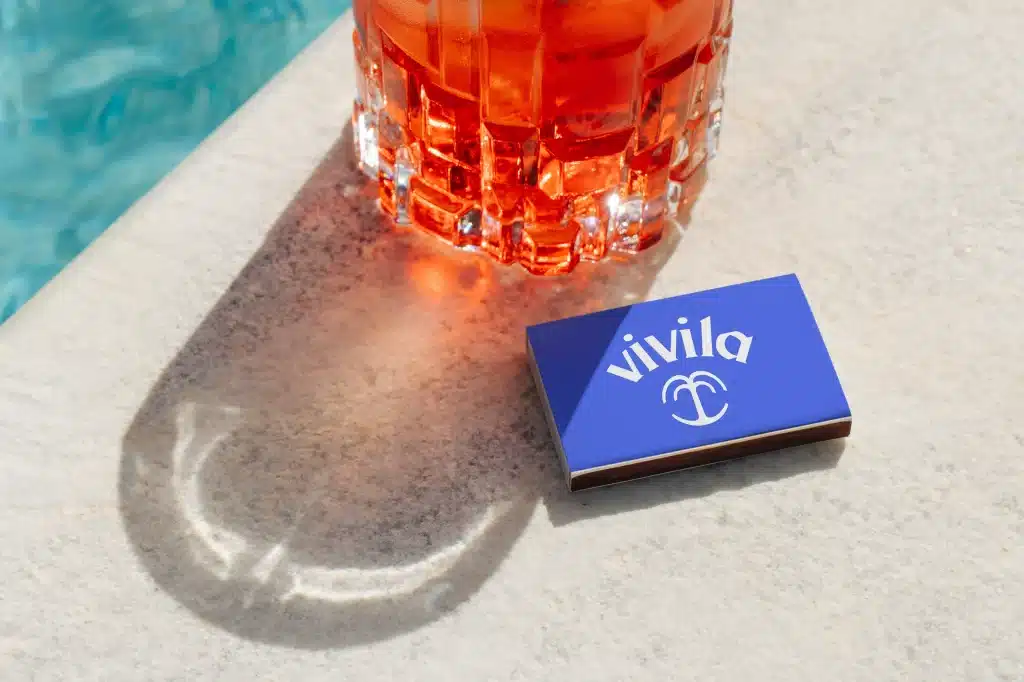
What none of us anticipated was that it would take the client almost two years of negotiations with another company over a similar-sounding name before they could actually use it.
Don’t forget URLs and social media handles too. Tools like Namecheck can help.
And be prepared for the .com you want to be taken. Often, a domain squatter is waiting for someone like you to show up with $5,000–$50,000.
A few ways around it:
- Use a country-code extension (.co.nz, .de) if your market is regional. This can actually build local trust.
- Add context, like wearebrandname.com, getbrandname.com, or brandname.studio.
- Consider newer extensions like .io, .co, or .brand. These are mainstream now and don’t just signal you couldn’t get the .com.
- If the .com really matters to you, factor the cost in from the start. Most of the time, though, it’s not worth the money.
4. The name is short
Less is more. Names with fewer than four syllables are easier to remember, repeat, and build a brand around. Nike, Uber, and Apple all work partly because of this.
If your name is too long, expect it to get shortened—not always in ways you’d want. Office Flower Solutions might just become OFS, like in my project folders.
5. The name is easy to spell and pronounce
Word of mouth and mental availability only work if people can actually say and spell your name. If it’s hard to spell, it’s hard to remember and search for—and that means lost traffic and lost customers.
The sound of your company name matters more than most people realise, too.
There’s a whole field called phonosemantics that studies how sounds carry meaning. For example:
- The soft “oo” in Google feels round and open.
- The hard “k” in Kodak is sharp and almost technical.
- The “i” in Wii feels playful.
None of this is accidental.
When you’re brainstorming, say the names out loud and notice how they feel, not just what they mean. That feeling is what you’ll build the brand around.
6. The name is easy to visualise
David Ogilvy talks about ideas that “have legs”. What he means is ideas that effortlessly lend themselves to design and campaigns, and are easy to picture in the mind.
Twitter is a perfect example. Although the name was invented, the company couldn’t have used any other symbol than a bird. And who doesn’t know what a tweet is?
Which makes it all the more puzzling why they changed such a well-established name to X. What does X even do?
7. It works across multiple languages
In our connected world, most brands reach an international audience, even if they don’t serve one yet. It’s worth checking what your name means in other languages before you commit.
An example is Mitsubishi. The company named its SUV after Leopardus pajeros, the Pampas cat. There’s nothing wrong with that until you say it out loud in Spanish, where “pajero” is a crude term for someone who masturbates. Mitsubishi sold the car as the Montero across Spain and most of Latin America. That meant a second set of badges, brochures and campaigns, because nobody checked one word early on.
With AI tools at your disposal, a rough cross-language check takes about five minutes. There’s no reason to skip it.
8. The name can grow with the business
Many businesses start out as one thing and become something else over time. The ones with overly specific names either end up with a misleading name or have to pay for a costly rebrand.
Another problem can be the reputation.
A recent example is Allbirds. In March 2026, the company sold its footwear business and the Allbirds brand to American Exchange Group for $39 million. The remainder of the original company then rebranded as NewBird AI and shifted its focus to renting out GPUs.
I find this split interesting because it shows how much a name is actually worth. The buyer paid for the name, not the factory. And the old company kept a version of it—NewBird—but not the thing people actually recognised.
Allbirds was a good name to begin with, open enough to have worked for plenty of other products. But a name only takes on the meaning that has been built into it over the years, and all of that stayed with the shoes. Honestly, I think they’d be better off starting from scratch.
The names that age well stand for something bigger than the current product line. But they’re still anchored to a feeling or a set of values.
- Patagonia started as an outdoor clothing brand and has since moved into food, activism, and film. The name works for all of it because the spirit behind it never changed.
- Google started as a search engine and is now an AI company, a hardware brand, and more. And the name still fits.
Think about where you want to be in ten years, and whether your name can carry you there.
9. The name works as a legal business identity
A strong brand name isn’t just about recognition or emotion. Over time, it also becomes the foundation on which your business is formally recognised and trusted.
At some point, most founders formalise their business and set up an LLC, Ltd, or GmbH, depending on where they’re based. It’s a small step that signals legitimacy and staying power to clients, partners, and anyone you’re signing contracts with.
That’s why your brand name also needs to work as a long-term business identity. Apple, Inc. and Nike, Inc. both sound natural.
If you’re serious about where your business is going, it’s worth involving legal experts early to make sure the name you like is actually available.
The 6 main types of brand names
Knowing your options will help you find a stronger name. Most brand names fall into one of these categories:
| Name type | Example | Strengths | Pitfalls |
|---|---|---|---|
| Founder | Ford, Zeiss | Unique, personal, authentic | Tied to one person's reputation; harder to sell the business later |
| Descriptive | Facebook, Kickstarter | Immediate clarity | Can feel generic; hard to trademark; easy to outgrow |
| Metaphoric | Puma, Amazon | Evocative; flexible for future pivots | Can be obscure; needs a strong story |
| Arbitrary | Apple, Nike | Highly distinct and memorable | Requires more marketing budget to build the connection |
| Altered | Spotify, Flickr | Easy to trademark; feels modern | Risk of misspelling in search or AI prompts |
| Invented | Kodak, Rolex | Entirely ownable; no prior meaning | Requires the most work to build meaning from scratch |
The 7-step brand naming process
Now you’ve got the theory, let’s look at how to come up with a strong brand name for your business step by step.
1. Start with strategy
Before you think about names, lay the groundwork. Without a clear brand strategy, any name is just empty words. Ask yourself:
- What makes your company different?
- What do you want to be known for?
- Who do you want to help, and how do you fit into their world?
- What’s your unique brand positioning?
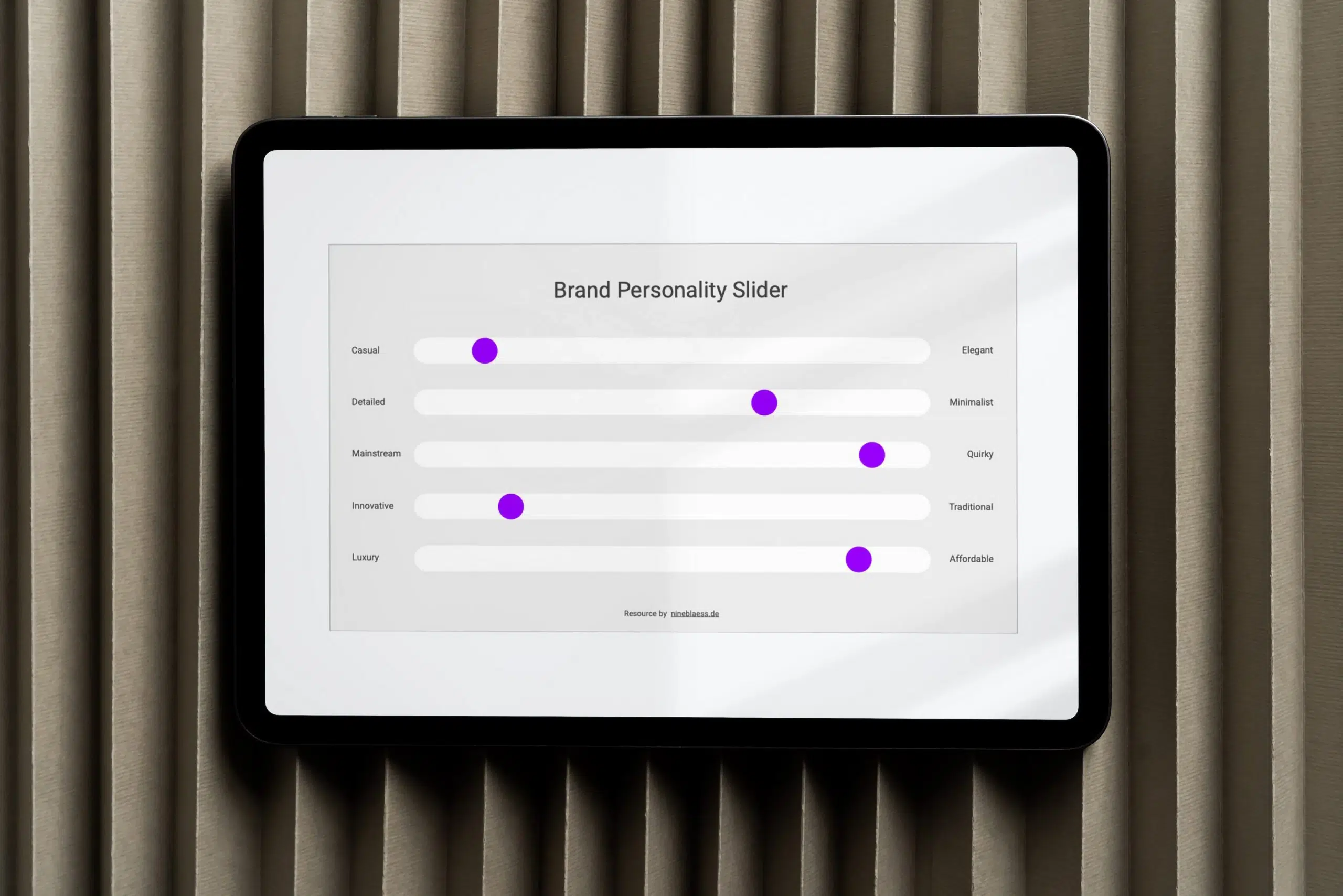
- What’s your distinctive brand personality?
- What are your brand values and beliefs?
Once you have this foundation, naming gets much easier—and more importantly, more purposeful.
Further reading
- If you are launching a new venture and need guidance on mapping out this foundation, my comprehensive guide to branding for small businesses is a great place to start.
- Or see how I help brands develop this foundation through my brand strategy process.
2. Explore all six types of brand names
Brainstorm brand name ideas in each category. Don’t overthink or filter at this stage, just get everything out of your head and onto the page.
If you’re stuck on how to come up with a brand name, try word association, competitor analysis, or AI-powered name generators.
Try to come up with at least 10 names per category.
Say them out loud. Do they feel right? Are there any unintended sounds?
3. Narrow your list down
Once you’ve got a big list, start cutting. Look for names that fit your strategy and feel ownable.
Cut anything too generic, too hard to pronounce, too trendy, or already taken. Aim for a shortlist of 5–10 strong options.
Ask yourself: if your business changed direction tomorrow—say, with a new product or new audience—would this name still work?
The brands that last are the ones whose names don’t box them in. Think about where you want to be in ten years.
4. Check availability
Search your shortlisted names as URLs and social handles. If your top domain is taken, get creative and try options like brandname.love or wearebrandname.com.
Run a basic search in your country’s trademark registry, too.
- In Germany: DPMA (Deutsches Patent- und Markenamt)
- In New Zealand: IPONZ (Intellectual Property Office of New Zealand)
This isn’t a replacement for legal advice, but it’s a useful early filter.
5. Test it
Ask a few people—ideally from your target audience—what they think of your top options. But don’t lean too hard on their reactions. Most great names sound strange at first.
In fact, when Phil Knight settled on Nike, his initial reaction was apparently[2]:
“I don’t love it, but maybe it will grow on me.”
He wasn’t wrong.
6. Check language and cultural meanings
Even if you don’t plan to go global, your brand will exist online, and the internet doesn’t stop at borders.
Run a quick check to make sure your name doesn’t have negative, odd, or unintentional meanings in other major languages. With AI tools, this should only take a few minutes.
7. Consult a trademark expert
Before locking anything in, talk to a trademark attorney or IP specialist.
They’ll do a formal clearance search and advise you on whether the name can be registered, which category to file under, and which risks to watch for.
Yes, it’s an investment, but it’s still cheaper than a rebrand or a legal fight down the track.
Final words—your name is not a one-time decision
This only becomes obvious after you’ve worked with brands for a while. A name isn’t just created, it’s actively built.
Over time, it picks up meaning through every client you serve, every piece of content you share, and every visual you put out into the world.
Step by step, this builds a whole brand world around the name, with the aim of having all your distinctive brand assets link back to it and reinforce it.
Consider putting together some basic brand guidelines for yourself and anyone you work with—about the tone, the capitalisation, and where you will and won’t use the name. It will save you headaches as you grow.
Further reading
In this context, you might enjoy my article on what makes a brand recognisable.
Frequent questions about creating a brand name
How do I create a brand name for my business?
What makes a good brand name?
A good brand name is short, easy to pronounce, emotionally resonant, legally available, and a good fit for your brand’s personality and industry.
How do I make sure my brand name is available?
Will AI remember my brand name correctly?
Only if it’s distinctive enough. As more people use AI assistants to find and compare brands, generic or derivative names risk getting muddled or overlooked entirely.
AI prefers things that are clear and distinctive. Anything that sounds too generic or too similar to other brands gets lost or is simply made up. You’ve probably noticed this yourself.
Which brand names stand the test of time?
Choose your name for substance, not trend. A few years ago every startup was dropping vowels—like Flickr or Fiverr. Before that, everyone was adding “-ify” to everything.
The names that last—like Nike, Apple or Google—didn’t follow trends. But they all have one thing in common: someone built meaning into them over time.
You can’t just choose a great brand name. You have to turn it into one by building brand awareness around it.
References
[1] Adapted from Marty Neumeier’s classification. He defines a strong brand name as differentiated, brief, appropriate, easy to spell, satisfying to pronounce, suitable for “brand play,” and legally defensible. For reference and examples, read his blog post: “Strong vs. weak names”.
[2] Phil Knight, founder of Nike, in his memoir Shoe Dog, Simon & Schuster (2016)