
After almost ten years designing brand identities for small businesses, my honest answer is almost always the same—although each company is different:
- It all starts with brand strategy. Without it, you might be investing in the wrong things.
- On that foundation, you can develop your brand assets as the building blocks for your collateral. If you can only invest in two, I’d make them your photography and typography.
- They then get applied throughout into your brand collateral, starting with your branded website—which, in most cases, is the most important piece of collateral you’ll ever own.
This article covers what brand collateral is, what’s genuinely worth investing in, and what most small businesses can safely skip; at least at the start.
What is brand collateral?
Brand collateral includes all materials created to represent a company and convey its brand identity. It can be physical or digital and includes business cards, letterheads, brochures, packaging, signage, advertising materials, or a branded website.
Your brand collateral plays an important role in establishing and maintaining a consistent and professional brand presence.
By consistently applying your branding to all promotional materials, your company can build recognition and trust with its target audience.
Brand collateral vs brand touchpoints vs brand assets & marketing collateral
Terms like brand assets, marketing collateral and brand touchpoints can be confusing. They are very similar, but not the same thing.
What exactly is the difference, and how does brand collateral fit into all of this?
- Brand assets: These are the building blocks of your brand identity—visual, verbal, or other sensory cues that make your brand distinctive. Examples include your logo, typography, colours, brand voice, and even jingles or scents. These assets are always used in context—in your brand collateral.
- Marketing collateral: These materials are a particular type of brand collateral designed to promote specific products or services and generate sales. Examples include flyers, brochures, catalogues, banners, and digital ads.
- Brand touchpoints: These are all points of contact—intentional or unintentional—a person can have with your brand. In addition to your brand collateral, brand touchpoints could include interactions with customer representatives, product experiences, and more.
Why your brand needs brand collateral
Professionalism & credibility
When people encounter your brand for the first time, you only have a few seconds to make an impression.
High quality brand collateral signals your level of expertise and uniqueness. It shows what your company is capable of and lays the foundation for further interactions.
If the first impression is negative, you have to work much harder to convince people of the quality of your offer. Or worse, they’ll buy elsewhere.
Consistency & trust
We live in a multi-channel world. Your brand can be seen on social media, via Google, in retail, or in person. When your visual identity and messaging stay consistent across all of these, your brand becomes familiar.
And familiarity builds trust—a phenomenon psychologists call the mere-exposure effect: the more people encounter something, the more positively they perceive it.
Differentiation
Professional and coherent brand collateral that remains consistent across all channels helps anchor your brand assets—logo, brand colours, tagline—in people’s minds.
Over time, they become identifiers that people immediately associate with your brand and set you apart from competitors—something I explore in more detail in my article on what makes a brand recognisable.
That said, not all collateral delivers equally. Being deliberate about what you actually create matters more than trying to tick every box.
Brand collateral examples
These are the brand collateral types my clients ask me to design. I’ve split them into print and digital and included a note on what each one is for, how to approach it, and whether I’d spend money on it at all. The examples show my client work.
Printed brand collateral
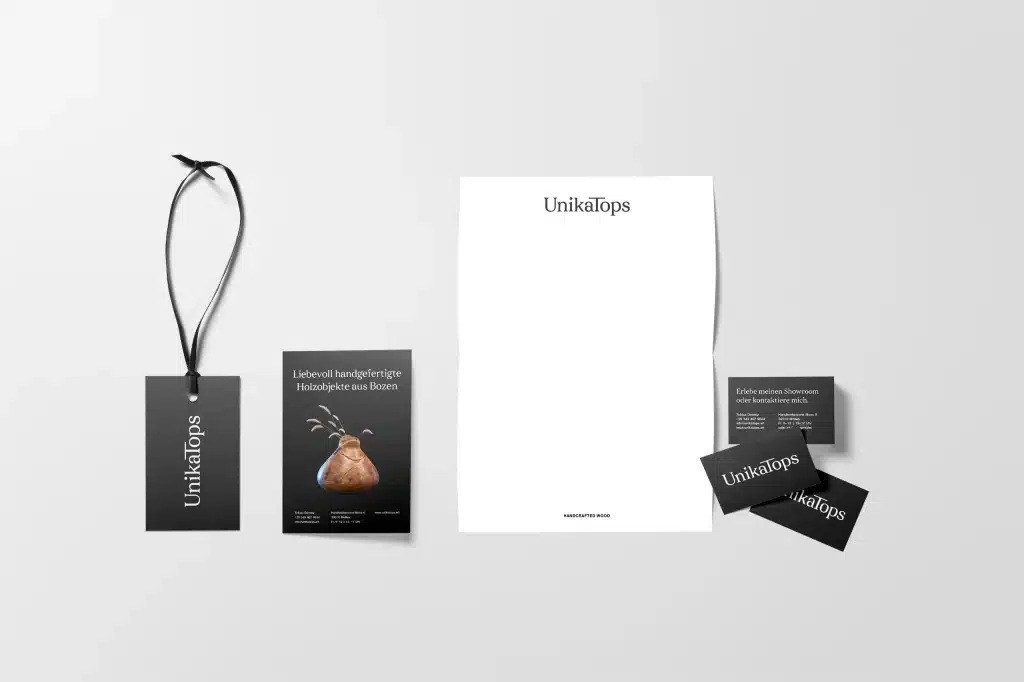
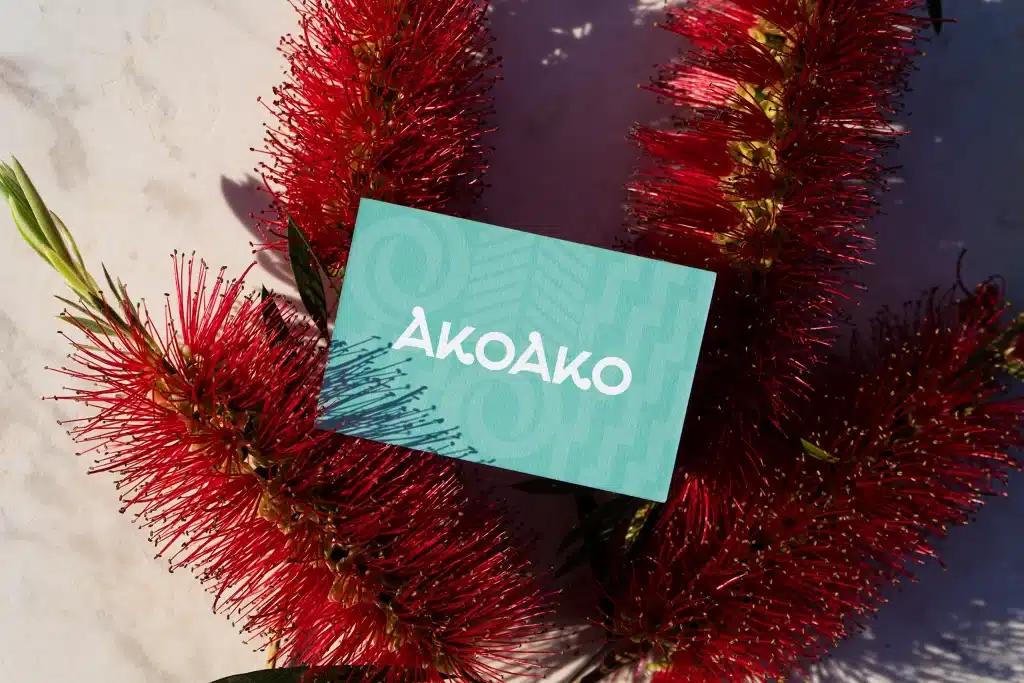
Business cards
I find business cards a bit of an overrated printed item. It’s not that they don’t work. It’s that many people never hand them out. So the question isn’t whether cards are outdated, it’s whether you’re someone who’ll actually give one to somebody.
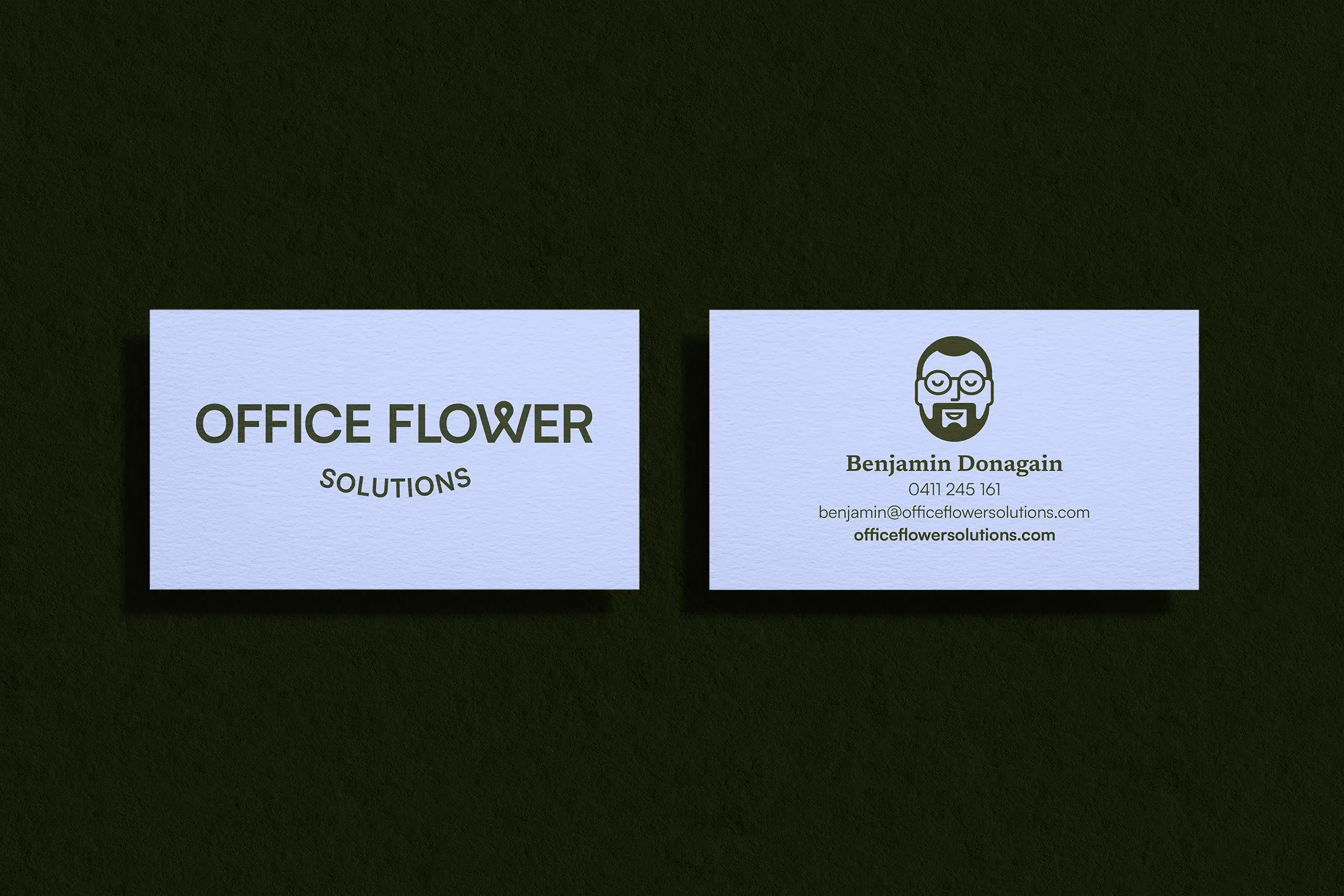
Some of my clients definitely are. Office Flower Solutions goes door to door and hands cards to facilities managers. Vivila’s owner likes to chat and always has cards ready. Hotel Post Gries keeps a stack at the front desk for guests. In these cases, business cards have their place.
For other clients, I tell them they don’t need any. If you usually connect with people online, a business card will just end up in the drawer. They’re inexpensive to print, so it feels like an easy decision. But don’t forget the design cost and the paper waste.
If you decide you need them, a QR code that saves your contact details straight to a phone saves the typing. It rarely makes the card look better, so decide which matters more.


Stationery
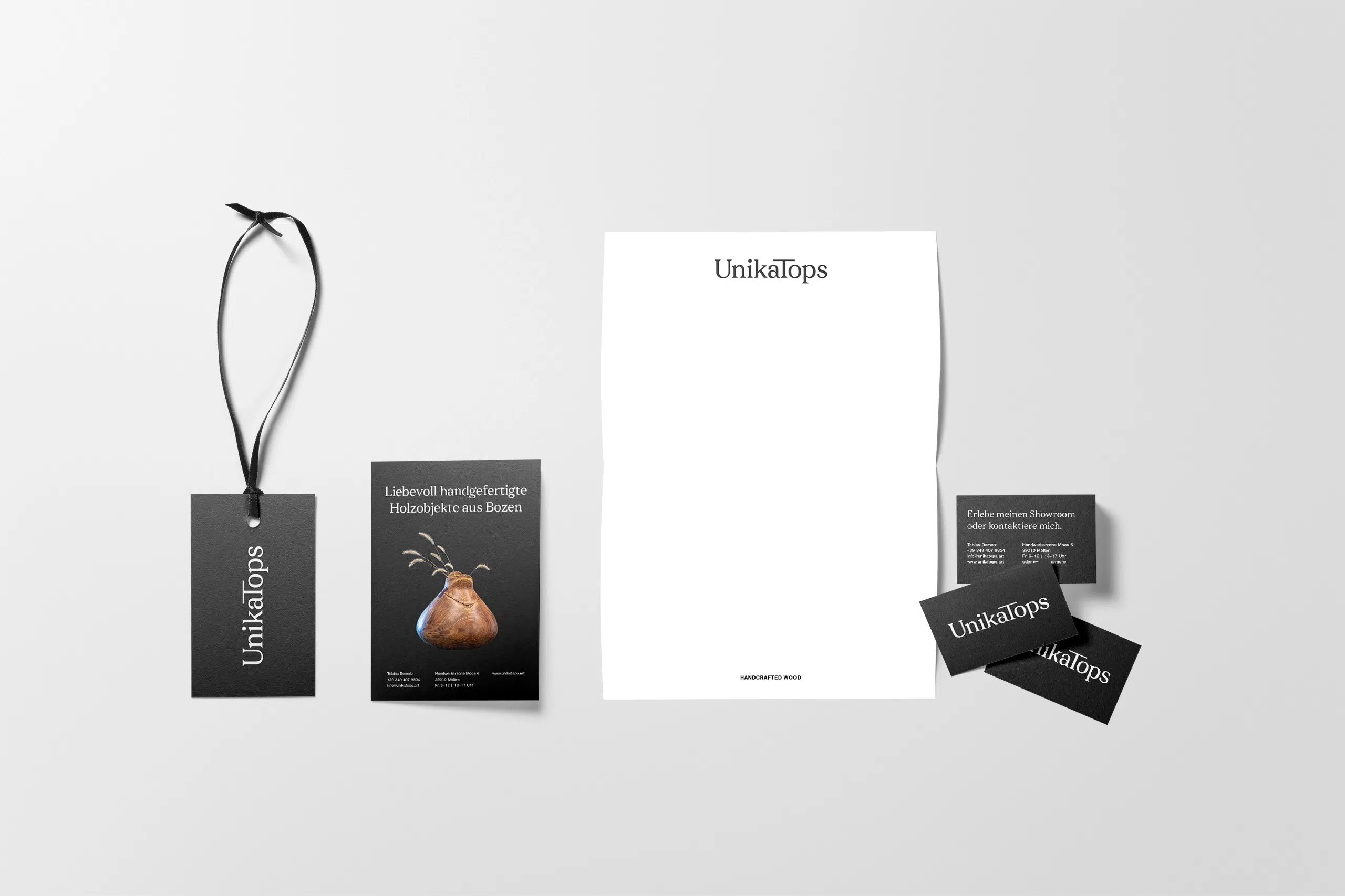
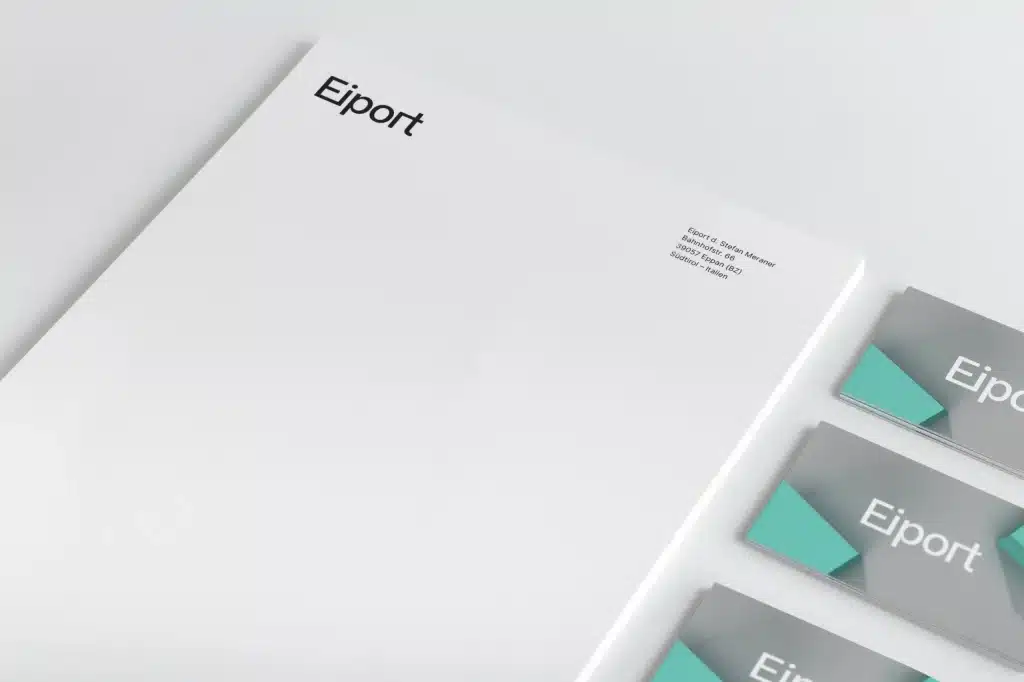
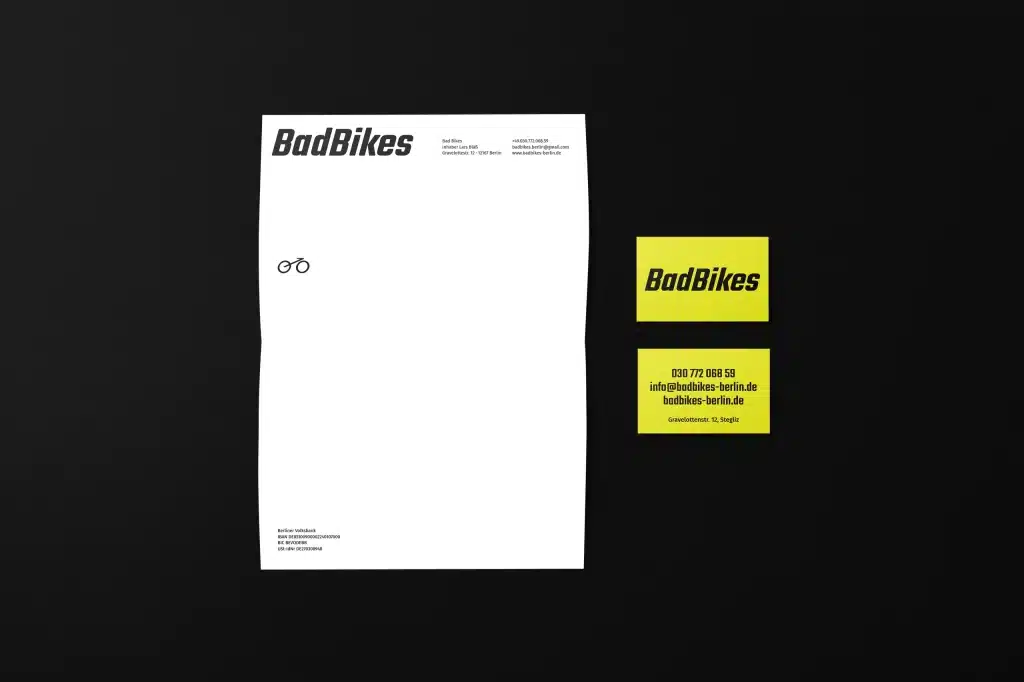
Stationery like letterheads, envelopes, contracts, and proposals is one of the easier and smaller wins. My clients usually set up what they need themselves.
A logo at the top of the letterhead is just fine. The document does the rest, and anything more elaborate tends to compete with the content anyway. What’s worth having is a template for a letterhead or a proposal with your typography and spacing built in, so you don’t rebuild the layout every time you need something. I sometimes set those up in Canva or Google Docs, where clients can edit them without coming back to me.
Printed stationery matters less these days. Most things get sent digitally. If you spend money on print, put it into a brochure or your packaging instead—something a client keeps or holds rather than files.
Flyers
In my experience, flyers are less common now. I prefer the digital approach because it is cheaper, less damaging to the environment. A targeted post or ad usually reaches more of the right people for the same money.
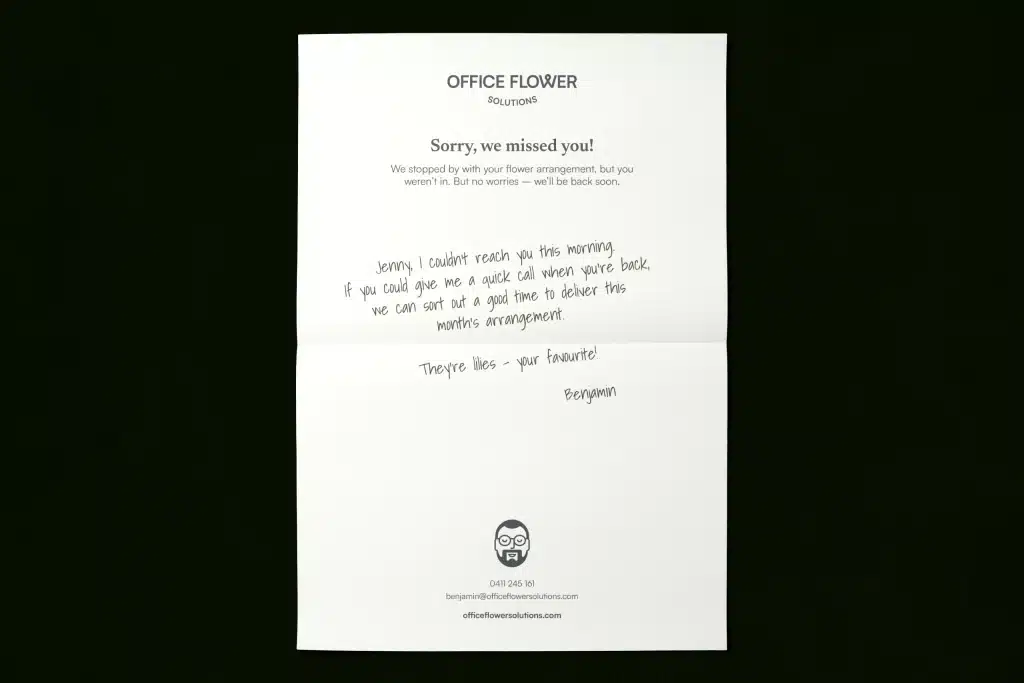
Yet in some cases, print has its place. The Office Flower Solutions founder walks into offices, speaks to the receptionist, gives them a business card, and leaves a flyer. The flyer is for those who weren’t in the room and need to be introduced to the brand’s flower rental offer.
If printing makes sense, I tell clients to do it properly, using quality paper and a format chosen on purpose. A cheap flyer is binned within seconds, while a well-made one sits on a desk for weeks. How far you go with this depends on your brand’s positioning too. A premium brand cannot afford to distribute a thin, poor quality flyer but a budget brand shouldn’t go over the top either.
If you decide to print flyers, including a QR code that leads to your website, menu or booking system will make it easier for people to take action.
Brochures
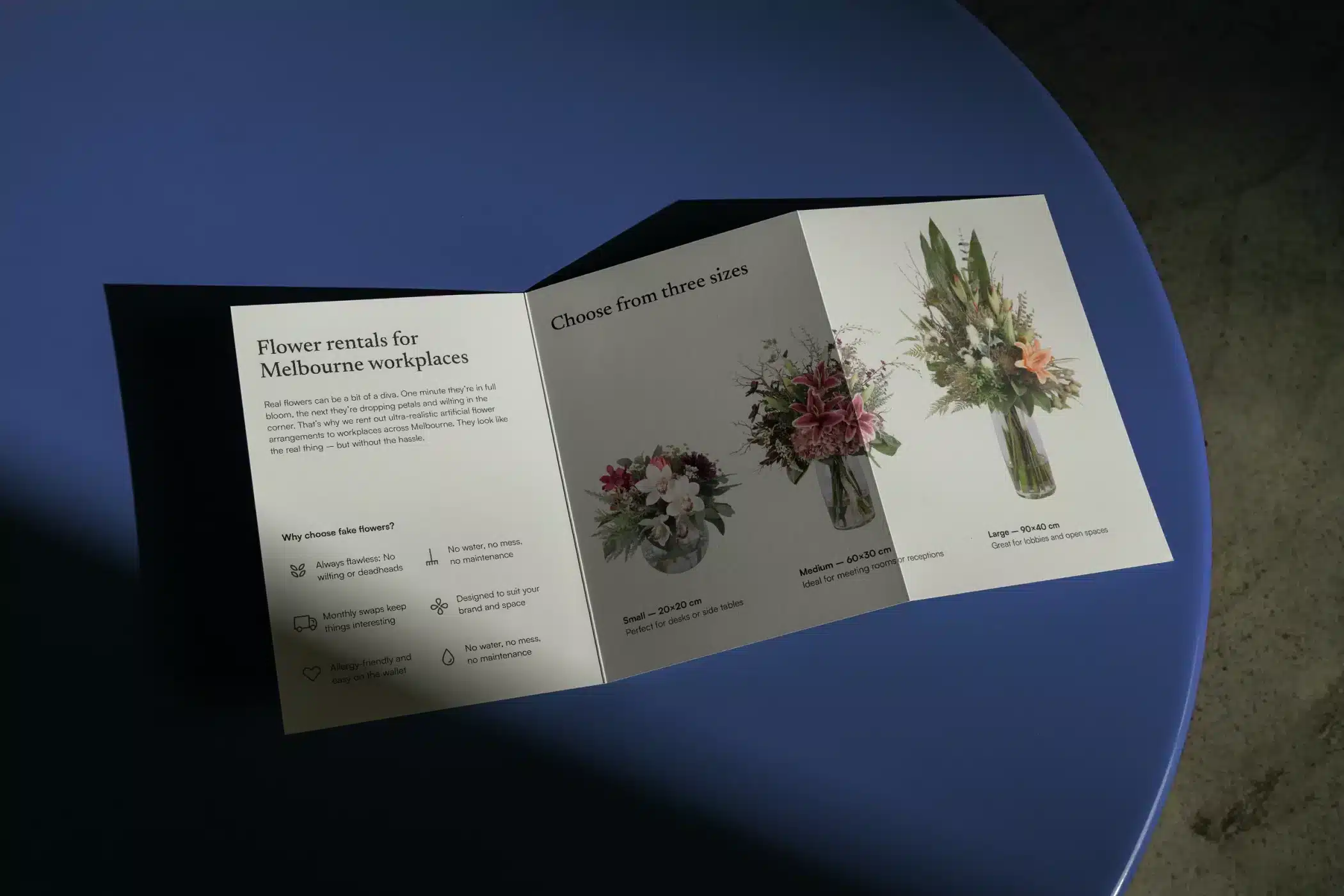
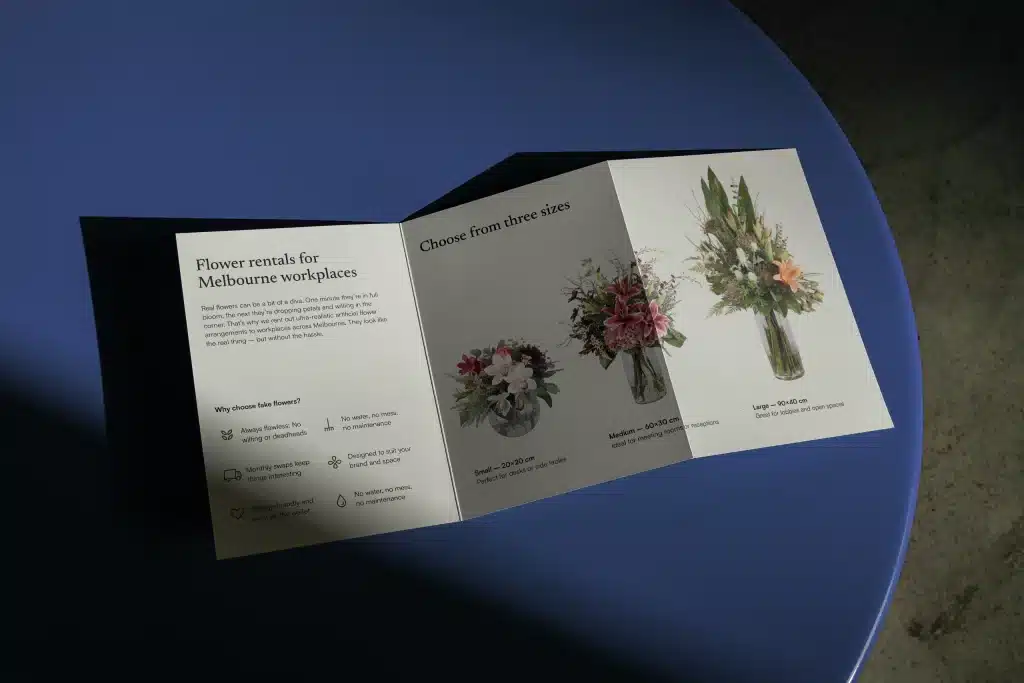
Most small businesses don’t need a brochure. Your website is often a better option for the same purpose, because it’s searchable, can be updated and won’t end up in the bin. But when you need to hand something out offline, a brochure can be a good way to explain what your company is about.
I designed a booklet for Südtirolhaus, who build timber houses. They needed something to hand to people walking past their trade fair stand, small enough to take home and read on the train.
Sometimes, you don’t need a whole booklet. For Hotel Post Gries, we designed a simple map-fold brochure that fits in your pocket on the way out of the building. That’s the moment print beats a website. It has information about the hotel on one side and local activities on the other.
As with flyers, when you need a brochure, you should invest in the content and print quality, since a well-produced brochure is likely to be kept and passed around. The printing method can also convey part of the message, for example by using algae ink if sustainability is part of your brand.

Tip
Good photography is important when designing your brand collateral. If custom brand photography isn’t in your budget yet, stock images will do the job in the meantime, as long as you pick the right ones. My guide to the best stock photo sites for authentic brand images is a good place to start.
Packaging
If you sell a physical product, packaging is your most important brand collateral, since it’s what people see the most.
Where your product will be used shapes its design. On a store shelf, it needs to stand out among other products. Online, it has to work as a small thumbnail, sometimes only 200 pixels wide. This often means using fewer details and stronger contrast than you might expect.
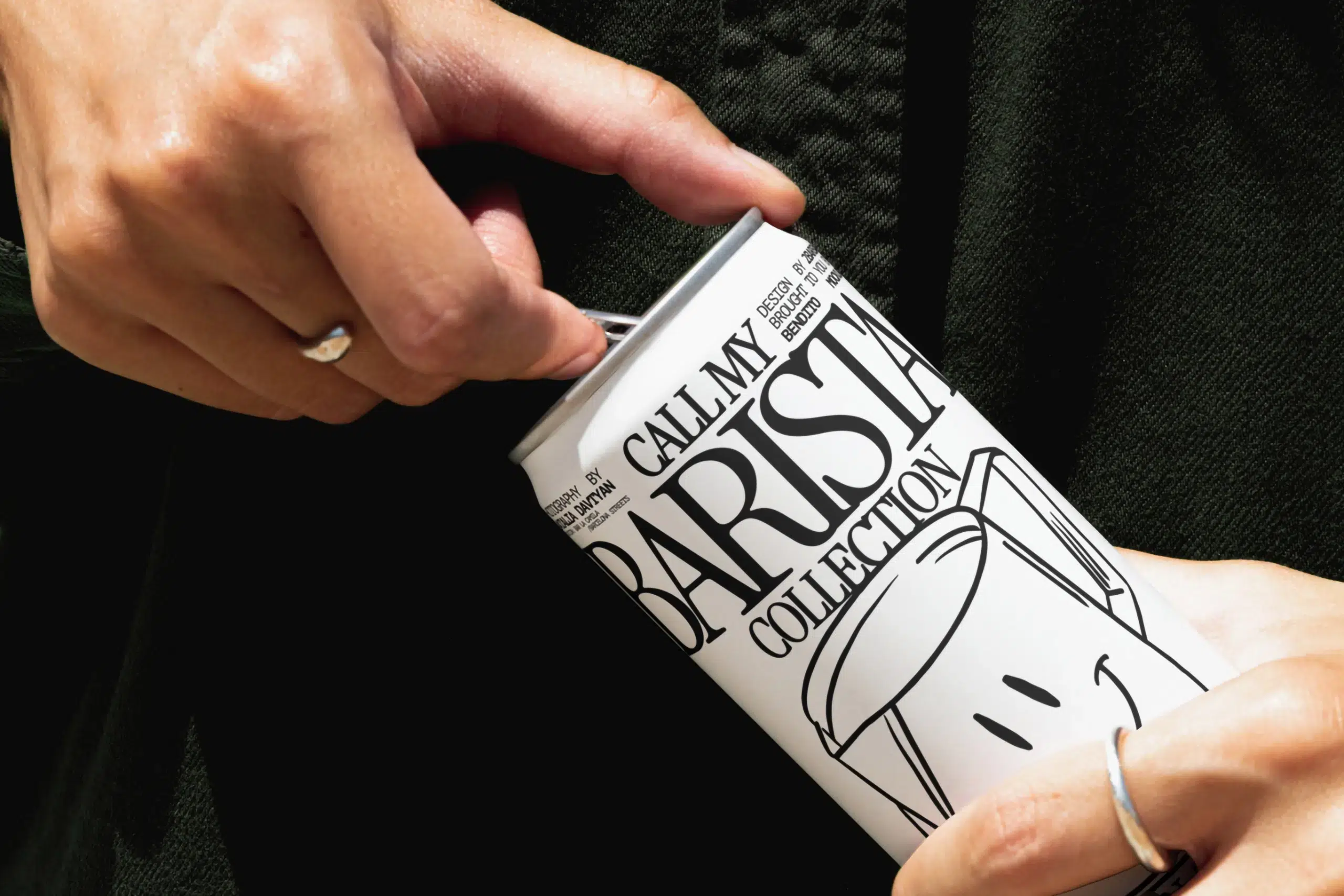
For Vivila, we chose a white design. Most drink brands use a lot of colour, so a simple white background stood out and let the illustrations shine. Each flavour has its own illustration, which helps people find what they want, and the white background ties the whole range together as one line rather than nine separate products.
Most of those boxes end up hidden under a bar counter where no one sees them. That’s just how bag-in-box works in hospitality. The shelf approach only mattered for the syrups and fruit drinks sold directly to customers. The rest of the range needed to look good in the trade catalogue, during sales talks, and as a unified line for bar owners choosing what to stock.

Signage
If you have a physical location or exhibit at trade shows, signage still matters. It’s the one piece of brand collateral that has to work at a distance and guide people even in the dark.
For Hotel Post Gries there are three signs, and they do different jobs. The lettering on the façade names the hotel and is meant to be read from across the square. The smaller sign with the arrow points to the entrance around the corner. A third one marks the way into the café and bar. All three are backlit at night. The first one carries the brand name, the other two solve a problem.
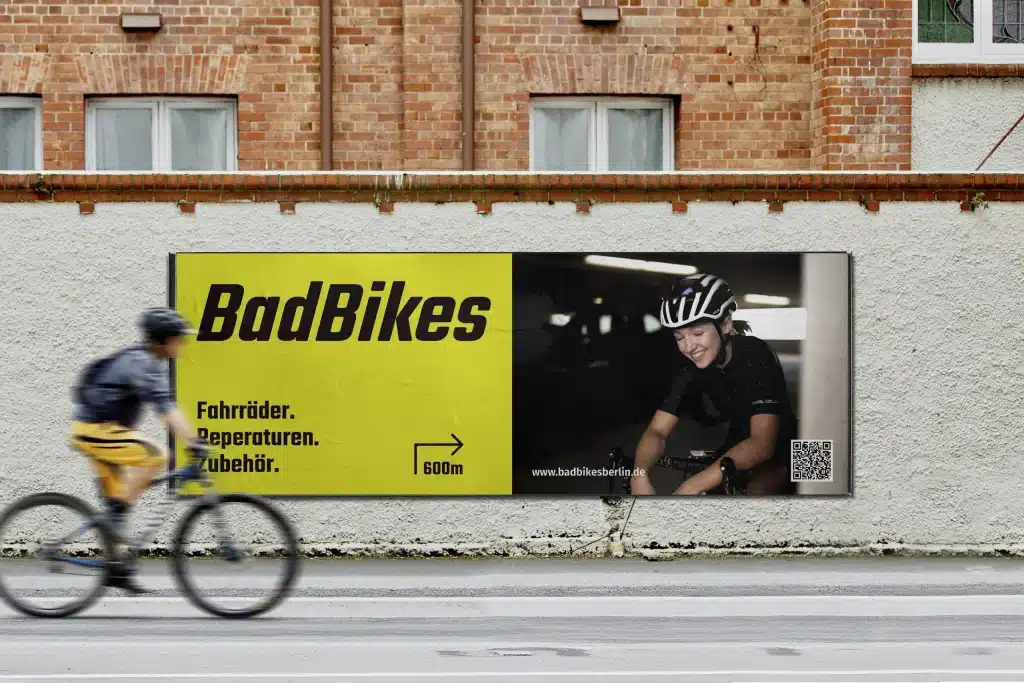
Signage can be smaller formats, like a café sign, a banner at an event, or point-of-sale graphics in a retail space, or it can be larger formats, like billboards, which small businesses usually don’t need.


Tip
Before finalising your design, you can use mockups to see how your printed materials will look in real life. You can find high quality sources in my article on premium mockup sites—a curated list of the best mockup sites (including some discount codes).
Other printed brand collateral
Depending on your business, this list can go a lot further:
- Menus, price lists, wine lists
- Hang tags, swing tags, care labels
- Stickers, labels, seals
- Packaging inserts, thank-you cards, care instructions
- Postcards, greeting cards, invitations
- Appointment cards, loyalty cards, vouchers
- Folders, presentation covers, document wallets
- Notebooks, notepads, planners
- Posters, prints, wall calendars
- Roll-up banners, exhibition walls, table runners
- Window graphics, floor decals, shelf talkers
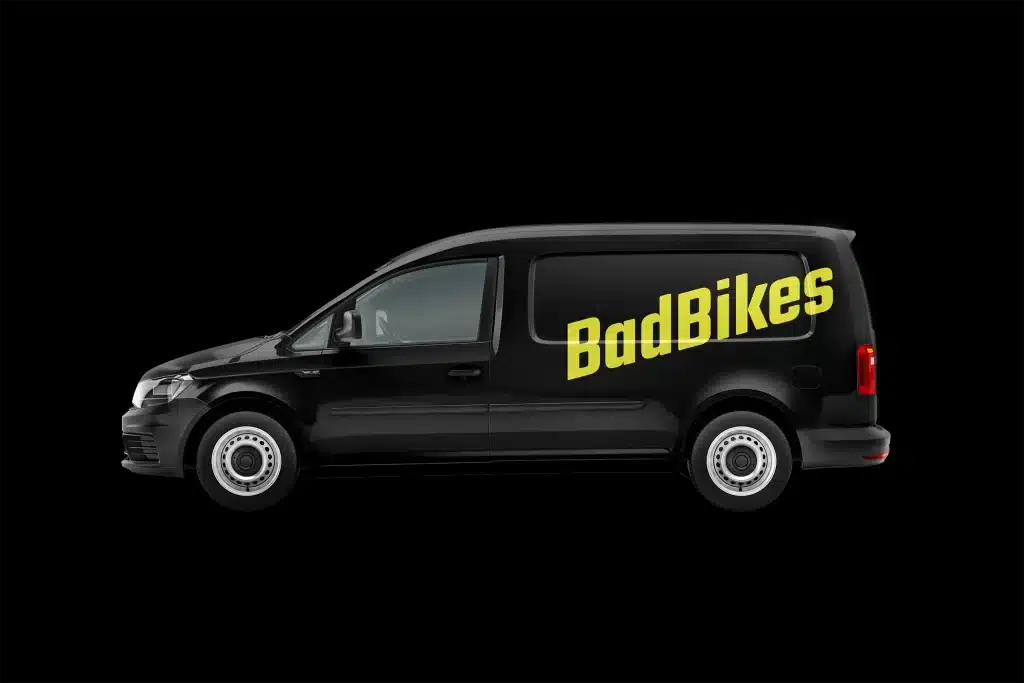
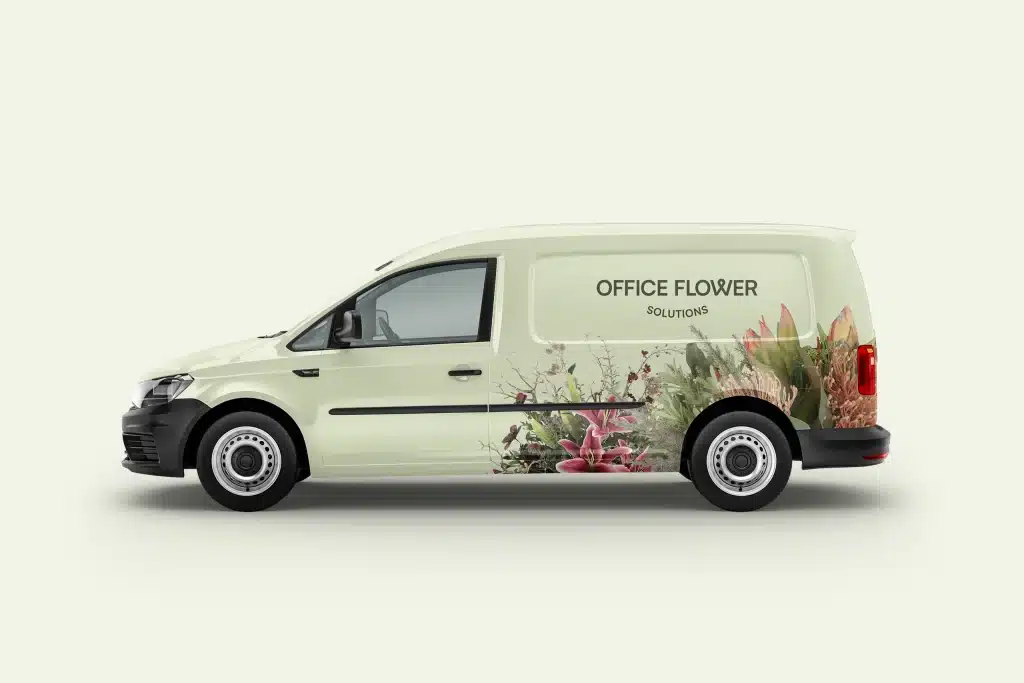
- Vehicle graphics
- Uniforms, aprons, name badges, lanyards
- Gift wrap, tissue paper, ribbons, gift bags
- Invoices, delivery notes, compliment slips
- Certificates, warranty cards, instruction leaflets
- T-shirts, caps, tote bags, drinkware
- Pens, sticky notes, magnets, keyrings


Digital brand collateral
Website and landing pages
Your website should be the foundation of your brand collateral and everything else points back to it. It’s your information hub, your sales tool, your portfolio and your first impression all in one.
It’s where all your news, links, products, and service descriptions come together. You can incorporate social proof like client testimonials, guide people exactly where you want them to go, and update everything without reprinting a thing.
A dedicated landing page can also be a strategic move when you want to drive a specific action, like a service launch, a campaign or a promotion. Send traffic from SEO, social media, or even a QR code on your print materials straight to it.
Unlike any print collateral, your website can be A/B tested, refined and improved over time based on real data. That flexibility alone makes it worth investing in properly from the start.
Of course, there are exceptions. Some B2B businesses rely entirely on referrals and personal relationships. But even then, a simple website helps you explain what you do, adds credibility, and gives people somewhere to send others.
Further reading
If you’d like to learn more about the benefits of having a website, you’ll like these reasons why your brand still needs a website.
Or you might like my article on designing a website that drives conversions.
Social media profiles and posts
Social media is powerful for some businesses and completely irrelevant for others. And it’s totally saturated.
Before investing time in it, ask yourself honestly: is my audience actually there, and am I willing to show up consistently? Because inconsistent social media can do more harm than good. It makes your brand look abandoned.
If the answer is yes, keep your visual identity and tone consistent across whatever platforms you choose. Authentic content tends to outperform polished templates. And people can tell the difference.
Email templates
Branded email templates are worth setting up for newsletters and promotional emails. Mailchimp, ConvertKit and similar tools make it pretty straightforward.
For your day-to-day email signature, keep it simple. Your logo, name, title and website is enough. Nobody needs your full brand manifesto in their inbox.
Digital ads
Digital ads are brand collateral too and as organic reach becomes harder to come by, they’re becoming more interesting.
Whatever format you use, keep your visual identity consistent. An ad that looks nothing like your website or social media creates confusion rather than recognition.
That said, ads are a specialist skill. If you’re considering investing in them, it’s worth working with someone who knows what they’re doing.
Educational material and content
Educational content, like blog posts, white papers, case studies, infographics, explainer videos, can build enormous trust and visibility over time.
It’s been one of the most effective tools in my own business.
But it’s worth being honest. AI overviews are changing the landscape. Simple how-to content is increasingly answered directly in search without a click. What still works is content with genuine depth, personal experience and a clear point of view.
Downloads, tools and templates may become redundant too, as people can simply ask AI. Honestly, I’m still figuring this one out myself.
Whatever format you choose, keep it branded. Educational content that connects back to your visual identity and voice builds familiarity over time — and familiarity builds trust.
Other digital brand collateral
Depending on your business, this list can go a lot further:
- Newsletter templates, automated email sequences
- Social media templates, story templates, profile and cover images
- Pitch decks, sales decks, proposal templates
- Presentation templates, webinar slides
- Lead magnets, checklists, ebooks, whitepapers
- Case studies, one-pagers, fact sheets
- Digital brochures and catalogues, PDF price lists
- Blog graphics, infographics, charts, diagrams
- Video assets: intros, outros, lower thirds, subtitles
- Podcast cover art, episode graphics
- Digital ads, display banners, retargeting creative
- Landing pages, microsites, booking and checkout pages
- App icons, splash screens, in-app graphics
- Digital business cards, QR codes, NFC cards
- Online menus, order pages, digital loyalty cards
- Invoice and quote templates
- Digital gift cards and vouchers
- Wallpapers, Zoom backgrounds, screensavers
- Job ads, onboarding documents, internal templates
Aligning brand collateral with the customer journey
The other thing that decides what you need is where people encounter your brand. Before you design your collateral, think through how someone first hears about your business, how they weigh you up against competitors, what finally makes them commit, what happens at the moment they buy, and how you stay in touch afterwards.
All this rarely happens in a straight line, but it’s a good way to pause and see if there are any gaps in your customer journey. If there are, that’s what your next design should fill.
For a service business that sells over a discovery call, your business website might cover most of these steps. For a product business, packaging is usually more important.
Best practices for developing effective brand collateral
Invest in professional branding and design
Your brand collateral will be more effective when it’s designed professionally—and I don’t just mean visually pleasing.
When you invest in brand strategy process and branding from the start, you can develop a brand identity that connects with your audience and sets your company apart. You can also create a messaging strategy that addresses people’s problems, needs, and objections effectively.
Your brand collateral can then be used strategically to express the brand identity and address people’s needs.
Further reading
Ensure consistency
I’ve said it before, and I’ll say it again: Keep your brand colours, brand typography, logo, and messaging consistent across all branded materials. This builds familiarity and trust and signals professionalism.
Further reading
Developing brand guidelines ensures that everyone in your organisation adheres to the same standards.
Another aspect of consistency is using the correct file format for your logo to ensure that it remains clear when printed on business cards, signage, or social media graphics. For a full breakdown, see my article on logo file formats.
Regular updates and revisions
When your strategy, market, or offer changes, you need to keep your brand collateral up to date.
You can also analyse customer feedback or data to make informed decisions about optimising the brand collateral.
Future trends for brand collateral
Digital-first
The shift is already well underway. Websites, social media, and email are now the primary channels for brand communication, and digital-first thinking should inform every collateral decision you make.
Businesses are also rethinking the physical. For example, digital business cards using NFC technology, like Tapt, let you share contact details with a simple tap and no printing required.
That doesn’t mean print is dead. As digital fatigue grows, print might be having a comeback as a deliberate choice that stands out precisely because everything else is on a screen.
Combine the two and it gets interesting: QR codes in brochures, interactive elements embedded in digital collateral, personalised direct mail that drives people online.
Augmented reality is pushing this further. IKEA Kreativ lets customers scan their own room, delete existing furniture and fill the space with IKEA products instead.
Personalisation
Data and AI tools now make personalised content and messaging accessible to businesses of any size. For small businesses, even simple personalisation—like a tailored proposal or a segmented newsletter—can make a real difference.
Sustainability
Eco-friendly production is becoming an expectation rather than a differentiator. If sustainability is part of your brand story, how your brand collateral is made should mirror that.
I wrote a comprehensive article with many ideas for creating more sustainable branding.
Conclusion
Not all brand collateral is worth your time and money, especially when you’re just starting out. The businesses that get it right focus on the foundations first—for me this means strategy, often photography and website. Everything else follows from there, depending on how and where you actually meet your clients.
What’s more, the landscape is changing quickly. Some formats are dying out, new channels are emerging, and AI is transforming the way people find and consume content. Brands that stay relevant make deliberate choices, rather than trying to do everything at once.
Need help with your branding? Feel free to contact me and let’s see if I can help you.
And lastly, if you’re wondering whether to outsource your brand collateral design, here’s a helpful guide comparing a branding agency vs freelance brand designer to help you choose the right option for your business.