
This article explains why that almost always backfires, and what branding actually involves: strategy and psychology, but also messaging, visual identity, and consistency.
Branding has been around for thousands of years. But it wasn’t until the Industrial Revolution—when everyone could suddenly produce at scale—that a question emerged that hadn’t really existed before: “Why should people buy from us and not the competition?” That question hasn’t changed since.
In a nutshell:
- Branding is the active process of shaping how your business is perceived
- Strategy always comes before design
- Branding runs deeper than visuals—it spans psychology, messaging, voice, and every decision you make
- Consistency builds trust and mental availability over time
- As a small business, you have something large brands can’t easily replicate—a person who deeply cares
What is branding?
Let’s clear this up first. Neither your logo nor your colour palette or tone of voice are your brand. They’re brand assets, the expression of your brand, and together they form your brand identity. Branding is the process of building that identity, and shaping how your business is perceived.
The brand itself is less tangible. It’s the sum of all impressions people have of your business. It lives in their heads, and you can’t fully control it.
But you can influence it—through every touchpoint, every interaction, every decision about how you show up.
Everything you do influences your branding. And when you do it well, you can charge higher prices, attract the right clients, and spend less time convincing people.
Because choosing a service provider or a product takes mental energy. Good branding reduces that effort—it signals at a glance whether you’re the right choice.
Read more:
My brand glossary explains all the key branding terms in plain language.
Why strategy has to come before brand identity
The most expensive mistake you can make is investing in design or copy before clarifying your foundations—your positioning, brand personality and messaging.
I get it. Design and copy are tangible and exciting. Strategy is more vague, takes longer, and costs more. So many small businesses skip it entirely—or do a watered-down version—and wonder later why the branding didn’t catch on.
In my opinion, strategy should always be the foundation everything else is built on. Without it, you don’t know what your audience needs to hear—or in what tone—where you sit in the market, and what sets you apart from other businesses offering the same thing.
A solid brand strategy answers questions like:
- What does this business stand for?
- Who is the ideal client? What do they believe before they find you? What keeps them up at night?
- What objections will they have—and how can your brand address them upfront?
- What position does your business occupy in the market? Is it distinct enough to stand out?
- What brand personality does the brand need to connect with these people?
- What do you want them to feel when they experience the brand?
These are fundamentally business questions. And the answers shape everything—from the brand personality to the colours and typography, the tone of voice, the structure of your website, and every business decision.
That said, brand strategy and business strategy aren’t the same thing, even though they’re closely connected. Business strategy is about operational and financial decisions. Brand strategy is about creating a specific perception that supports those goals.
A clear, narrow brand positioning also has another advantage. It makes you easier to find—for people, search engines, and AI tools alike.
The more specifically you stand for something, the more likely you are to be seen as the go-to option for it.
Example: Supertrash
Supertrash is a small rubbish collection company from Auckland, New Zealand. Together with design agency Seachange, they decided their workers are essentially superheroes.
With fluorescent pink, comic-inspired patterns and the tagline “Turning trash around”, their trucks are impossible to miss on the street.
They offer a pretty unremarkable service—but attach a completely different perception to it.
Read more:
- How to tell apart business strategy, brand strategy, and marketing strategy
- My step-by-step brand strategy process
- Brand positioning examples showing how real brands—big and small—carved out their space
Personal brand vs business brand—which one do you need?
This is a question that trips up a lot of solopreneurs and small business owners.
Personal branding
Your personal brand is built and curated around you as a person—your name, face, expertise, and perspective. You’re who clients trust and recommend.
Consultants, coaches, freelancers or designers often go this route because, in a way, the person is the product—whether working alone or sometimes with a small team behind the scenes.
Business branding
A business brand is built around a company identity that exists independently of any one person. It can grow, be sold, build a team, and outlast its founder. The brand works whether you’re there or not.
Which one is right for you?
Neither is fundamentally better. It depends on what you want to build.
If you want to stay small, work directly with clients, and be known for your expertise, a personal brand makes sense. It’s faster to build and easier to keep authentic. The downside is that it’s harder to scale—and if you ever want to step back or sell, the brand doesn’t transfer easily.
If you want to build a team and attract bigger clients, a business brand gives you more room to grow. It’s more work upfront, but it pays off in the long run.
For many small business owners, the answer is somewhere in between—a business brand with a strong personal presence behind it. That’s often the smartest move. The brand can grow and evolve, but it’s clear who’s behind it. That builds trust, which in turn strengthens the business brand.
Whatever you decide—the most important thing is to make that decision consciously and early. Because it shapes things like your brand name, your identity, and how you show up externally.
Other types of branding
Branding happens in more contexts than most people realise. Beyond personal and business branding, there are others—though they all follow similar principles:
- B2B branding applies the same principles when your audience is other businesses. Trust signals matter even more here, because decision cycles are longer.
- Product branding means branding individual products within a larger brand—like the iPhone within Apple.
- Employer branding is how a company presents itself to potential employees. Small businesses often overlook it, but it’s becoming increasingly important as the job market gets more competitive.
In practice, these categories blur. What matters is simply knowing which context you’re operating in, so you can make the right decisions for your audience.
Why branding works—the psychology behind it
People don’t evaluate brands rationally. They react to them—often fast, unconsciously, and emotionally.
The Halo Effect
Studies show that people form an impression of your website in as little as 50 milliseconds, before they’ve read a single word. At that point your visual identity is the only reference point they have.
This is due to the Halo Effect. When a brand makes a coherent, professional impression, people transfer that quality to their overall perception of your brand—your expertise, reliability, and pricing.
The reverse is also true. An inconsistent or generic brand signals that you might not be worth the investment, or simply reads as cheap. This is called the Horn Effect.
Now, with AI polishing everything to perfection, it’ll be interesting to see how the Halo Effect shifts. People are increasingly bored of generic, interchangeable content. There’s already a term for it: AI Slop.
Small imperfections like handmade details or quirky human touches already signal quality in a way that flawless AI output can’t easily replicate.
Some copywriters are now deliberately writing rougher so their work can’t be mistaken for AI. Maybe human imperfection will be the new luxury in branding.
Read more:
Here’s how the Halo Effect works in branding and marketing.
More principles worth knowing
- Cognitive ease: Solid typography, consistent layouts and clear messaging make your content easier to process—and therefore more credible. Cluttered, inconsistent design makes your clients subconsciously doubt you.
- Social proof and authority: Cialdini’s principles of influence—like authority, liking, and social proof—show up everywhere in branding. A well-placed testimonial, a case study, or an approachable tone can make the difference between someone trusting you or not.
- Pricing and brand perception: Your visual identity influences what people are willing to pay. A premium price next to generic design reads as unconvincing. But the reverse also happens: a brand with a mismatched sophisticated aesthetic can feel out of reach and put off your audience before they even look at the price.
Read more:
- How Cialdini’s 6 principles of influence work in branding
- How your pricing affects brand perception
- 25 cognitive biases that explain the irrational behaviour of consumers
Messaging and voice—what you say and how you say it
Visual identity gets most of the attention in branding. But what you say—and how you say it—matters just as much. I’d say even more.
Core messages
The first layer is what you communicate—what problem you solve, for whom, and why you and not someone else. These are your core messages.
Your tagline is part of this. A good tagline distils your value proposition into a single line that sticks and immediately makes clear who you’re for or what you stand for.
Take Hinge. “Designed to be deleted” is their tagline and their entire brand platform. The visual identity, the onboarding, the mascot—everything expresses the same idea. That’s what a strong core message can and should do.
Brand voice
The second layer is how you sound. This is about expressing personality—through your word choice, sentence structure, and other language choices.
A strong brand voice is recognisable across platforms because it has the same character everywhere—whether on your website or in the first conversation with a new client.
When small businesses start out, their voice often sounds interchangeable—full of phrases like “We’re committed to our clients’ success.” These phrases mean nothing. The space would be better used for something like: “Your success means our success. Sounds good, right? Well, we mean it, too.”
That generic tone usually happens when a business hasn’t yet figured out who it is, what sets it apart, and who it’s actually trying to reach.
Small businesses do have an advantage here, because often only one person is communicating. Your natural way of speaking is already the company’s voice.
Read more:
Visual identity—the look and feel of your brand
Once you’ve defined your strategy and messaging, you can build the design on that foundation. Your core messages, copy, and visual design should work together. Built on the same strategic base, the brand starts to feel like its own world rather than a collection of unrelated pieces.
Every visual decision—from typeface to colours, to imagery—ultimately says something about your brand, even a design decision that wasn’t made consciously. So, the question is whether you control it or not.
Logo
Your logo is the strongest visual link to your brand name. It’s what people recognise at a glance and what holds the whole visual identity together. But it’s also normally the last thing I tackle—because when positioning and personality are clear, the logo almost designs itself.
If you already have a logo, make sure it’s available in the right file formats for different uses and in the necessary variants—for print, web, and social media.
Read more:
Everything you need to know about logo file formats
Brand typography
The typefaces you choose communicate the character of your brand.
Serif fonts trigger different associations than sans-serif. Condensed type feels different from extended type. That’s not coincidence, but learned cultural association, and it works whether your audience is conscious of it or not.
Beyond that, your brand typography is a system that creates hierarchy, guides readers through your content, and ensures everything feels cohesive—wherever someone encounters your brand.
Read more:
Brand colours
Colour creates recognition and triggers emotions. But like typography, it’s about creating a system.
Which colours you use for backgrounds, how you use them in shapes and structures, where you place accents, and how you combine them—all of this together either creates a cohesive picture or it doesn’t.
The goal isn’t to choose colours you like, but colours that fit your audience, your market position, and the emotion you want to evoke.
Brand imagery
Images that look natural and specific show there’s a human behind the brand. Overly polished stock photos are the opposite—they say nothing about the personality or style of the brand.
The same goes for icons, illustrations, and patterns. And for all of these elements—you probably guessed it—consistency builds recognition.
Read more:
Implementation & consistency across touchpoints
Every decision, every detail, every interaction sends a message about your brand.
Distinctive brand assets
All the elements you deliberately create—your brand colours, imagery, a jingle, your brand voice, or tagline—are your brand assets. But creating them isn’t enough.
Strong brands make sure these assets become so strongly linked to the brand over time, so that people immediately think of them—even when the name isn’t visible. That’s what’s called Distinctive Brand Assets.
But brand assets don’t become distinctive on their own. It takes consistent repetition at every touchpoint over a long period of time, until the mental link to your brand becomes automatic.
Read more:
- Distinctive brand assets—what they are and how to build them as a small business
- What makes a brand recognisable?
Brand touchpoints
Every interaction someone has with your business is a brand touchpoint—your website, a proposal PDF, but also a customer service interaction or a review of your product on YouTube.
Touchpoints aren’t always fully within your control. A Google review or a recommendation in someone’s Instagram Story shapes your brand just as much as the things you deliberately design.
Read more:
Brand collateral
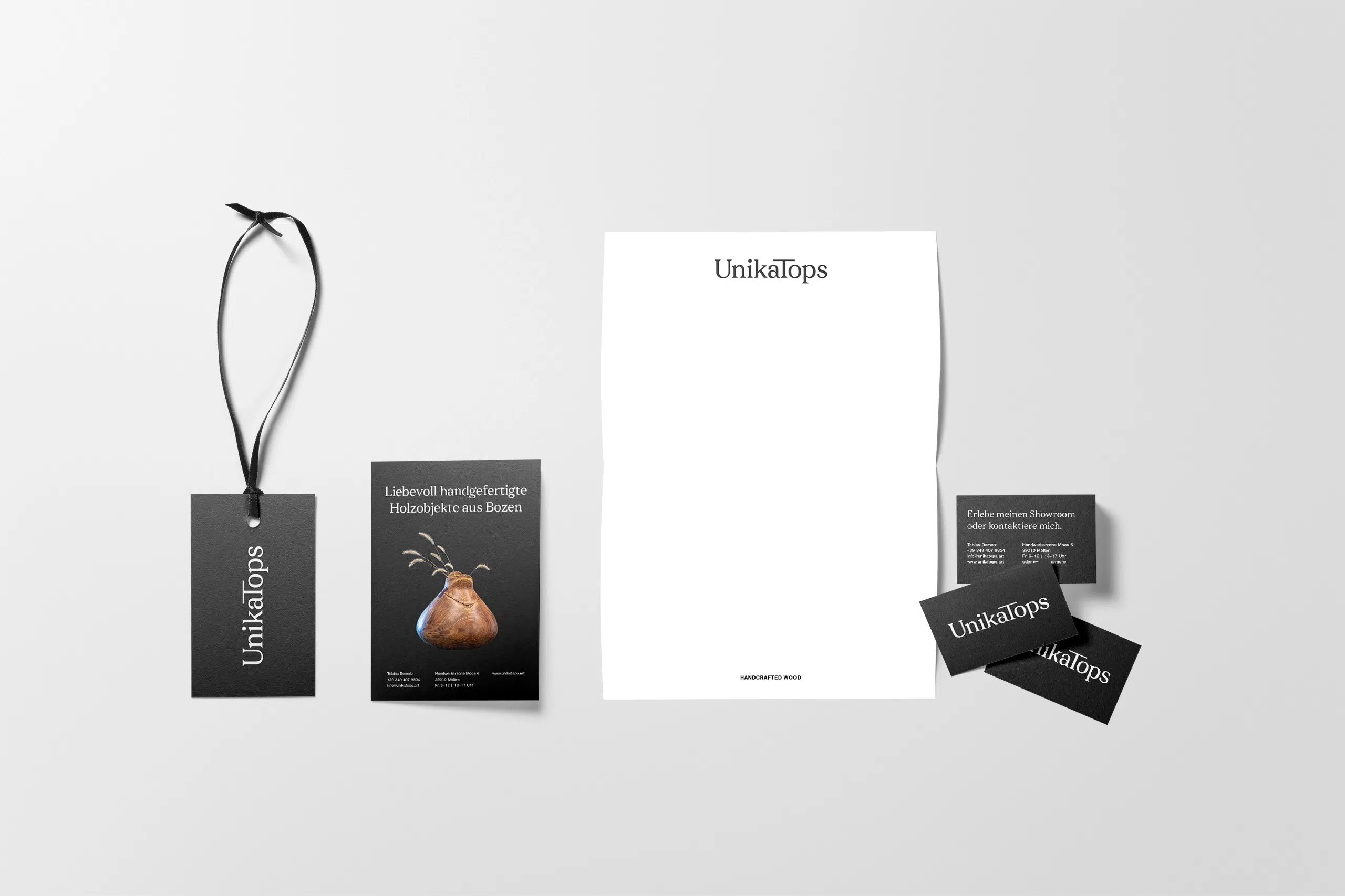
Brand collateral is the material side of your brand, such as business cards, packaging and presentations. It’s where your visual and verbal identity becomes tangible.
Your website deserves particular attention. When someone visits it, they’re often close to a decision—unlike a social media post they might stumble across. A well-branded website feels like your brand through and through.
It’s usually consistency, not perfection, that makes a brand feel trustworthy. When everything you create reflects the same core identity, people feel like they know the brand. And that familiarity is the foundation of loyalty.
A good example is Vacation®, a sunscreen brand inspired by 1980s Miami leisure culture. From the packaging to the scent to the customer service emails signed by the fictional Ray Smith—every detail sells the same world. That’s what consistency looks like when you fully commit to it.
Read more:
Brand collateral: what actually works and what’s a waste of money
Brand guidelines
When it comes to consistency, brand guidelines come into play. They define how the logo is used, which colours go where, how the brand voice sounds, and what kind of imagery fits the brand.
That way, you—or a team member—still sound like your brand six months from now, whoever is writing or designing.
Read more:
How to create useful brand guidelines
Brand decisions
A strong brand shapes all business decisions, even those that go beyond the visual or verbal. Because remember—your brand is about the reputation of the business.
It should act as your filter. Which co-branding partnerships fit? On which channels should you build brand awareness? Which trend should you probably not follow?
A good example is Oatly. When the Swedish dairy lobby sued them, they published the court documents and turned them into a campaign. That decision was only possible because the company had a clear point of view. The clearer your brand, the easier those calls become.
And sometimes the brand you’ve built no longer reflects where you are today. That’s when a brand audit might be the right move.
How to know it’s time for a brand audit
Brands aren’t static. Your business evolves, you get clearer on who you want to work with, you raise your prices, or you move into new markets—and sometimes the brand doesn’t keep up.
The signs usually feel like friction:
- You’re attracting clients who don’t feel like the right fit.
- You feel like you have to over-explain your value.
- You’re slightly embarrassed to send people to your website.
- Your business, market, or audience has shifted so much that the original brand identity no longer fits.
That’s what growth looks like. And it often means it’s time to check whether your brand still reflects where you are—and where you’re going.
A brand audit is a structured process where you check what’s working, what’s inconsistent, and what no longer fits—from your brand foundation through messaging and communication to your visual identity.
It shows you where the gap is between how you want to be perceived and how you’re actually coming across.
Most small businesses I work with fall into one of two situations:
- Either the brand was never really built on a foundation and things accumulated over time without much intention.
- Or there’s something strong that isn’t being applied consistently. The strategy is solid, the voice is good, but the typeface chosen is Roboto, which every competitor also uses.
Either way, a brand audit gives you clear next steps.
Sometimes it shows you just need to apply your brand assets more systematically. Sometimes that you’re not communicating clearly enough. And sometimes that you need to rethink your positioning—or need a full rebrand.
Read more:
- How to conduct a brand audit as a small business
- When is the right time for branding your small business
A note on the legal side of branding
Branding involves creative work—and with that, intellectual property. It’s worth knowing the basics so you don’t run into problems later.
- Protect your brand name and logo. A registered trademark gives you the right to prevent others from copying or imitating your name or logo in the same industry.
- Secure your domain and social media handles early—ideally before you make your brand name public. Consistency in your brand name helps people, search engines, and AI tools recognise you clearly.
- Use clear contracts with your designer or agency. Make sure the ownership transfers to you after completion—that’s not a given.
- Respect others’ intellectual property. Don’t copy logos, and make sure you have the right licences for your fonts and imagery.
- Be careful with AI-generated content. The ownership question varies by tool and jurisdiction. Read the terms before using AI outputs commercially.
- Comply with GDPR. If your website collects data through forms, newsletters, or analytics, you need a legally compliant privacy policy.
- Decide how visible you want to be to AI tools. If you don’t want your content used for AI training, block AI crawlers in your robots.txt. An llms.txt file is quick to add and does no harm, but don’t expect much from it. Google has said it doesn’t use it, and the crawlers that feed AI answers rarely request it. Consistent content and clear entity signals usually get you cited.
- Label realistic AI-generated images. Since August 2026, the EU AI Act requires a visible label on AI content that people could mistake for authentic photos of real people, places, or events. Stylised illustrations don’t need one, and neither does your website copy. The labelling rules for text only apply to publications on matters of public interest. This applies to anyone publishing content for an EU audience, wherever the business is based.
None of this needs to be complicated. But ignoring it can cause expensive problems. Better take a little time to think these things through now.
Branding is a long-term investment
Businesses that get branding right treat it as an ongoing process. They show up consistently and develop their branding as their business grows.
In the long run, a strong brand lowers the cost of acquiring new clients and signals quality and relevance. You spend less time convincing people. But none of that happens with a logo alone—it happens when strategy, psychology, messaging, and visual identity work together.
While large brands have big budgets and teams, as a small business you have something they can’t easily replicate: a person who speaks directly with clients, makes every decision themselves, and genuinely stands behind what they do.
Doing it yourself vs bringing someone in
Everything in this guide is doable on your own. With a few focused weeks, some useful input from your customers and the linked articles above, you can build a brand that works pretty well. Plenty of small businesses have done exactly that, and if that’s your plan, you now have the map.
If you’d rather hand your branding over, this is what I do for a living. I develop strategy, design, and copy as a cohesive system, in English or German. I only take on around four projects a year so each one gets my full attention.
If you’re building your brand and like how I think, tell me about your business, and I’ll tell you honestly whether I’m the right fit.
Frequent questions about branding for small businesses
What’s the difference between branding and marketing?
Branding defines how your business wants to be perceived—its identity, values, and positioning. Marketing promotes your offering, using that identity as the foundation.
Branding is long-term and strategic; marketing is shorter-term, more tactical, and campaign-driven.
Branding is the reason why someone chooses you, and marketing makes sure they find you in the first place.
How long does branding take for a small business?
A brand identity project—including strategy, brand identity, and basic brand guidelines—typically takes four to eight weeks for a small business, depending on the scope and how quickly decisions are made.
If you rush it, the strategy phase usually gets skipped—and that’s where most of the value is. If someone promises you a complete brand in two days, be sceptical about what you’re actually getting.
What does branding cost?
It varies significantly depending on the scope and who you work with. My branding projects start at NZD 5,500—more depending on scope. A freelancer handling strategy, design, and copy typically costs less than an agency—and you work with one person who understands the whole picture, rather than briefing multiple teams.
But more important than the price is what’s included. A brand built on strategy will serve you far longer than a logo-only project.
Can I do my own branding?
Yes, up to a point. AI tools have made it easier to generate visuals, and you can absolutely develop parts of your brand strategy yourself.
But when you work on it alone, you’re often too deep inside it to see the things someone from outside would notice immediately. A brand designer brings exactly that perspective—they see your brand the way your clients do, and have the experience to avoid the typical mistakes.
If you’re unsure whether to hire a branding agency or a freelance brand designer, this article explains the difference.
When should I rebrand my small business?
When your brand no longer shows who you are, how you’re positioned, or who you’re trying to reach. The clearest triggers are a fundamental change to your offer, audience or market, or the shift from a personal brand to a business brand. For the subtler signs, have a look at the brand audit section above.
Does branding help with SEO and AI search?
Yes, more than most people would expect. Search engines no longer just rank content but entities—recognisable, consistent presences they can map across the web.
When everything Google finds about you tells the same story—your brand name, your website, your social media profiles, and how others mention you online—Google understands who you are and trusts your content more.
The same applies to AI tools like Claude or Perplexity.
So, the more consistently and specifically you stand for something, the more likely you are to be named as the go-to option for it.
When your website, your Google Business Profile, your customer reviews and your social profiles all show the same thing, your business becomes exactly that kind of entity.
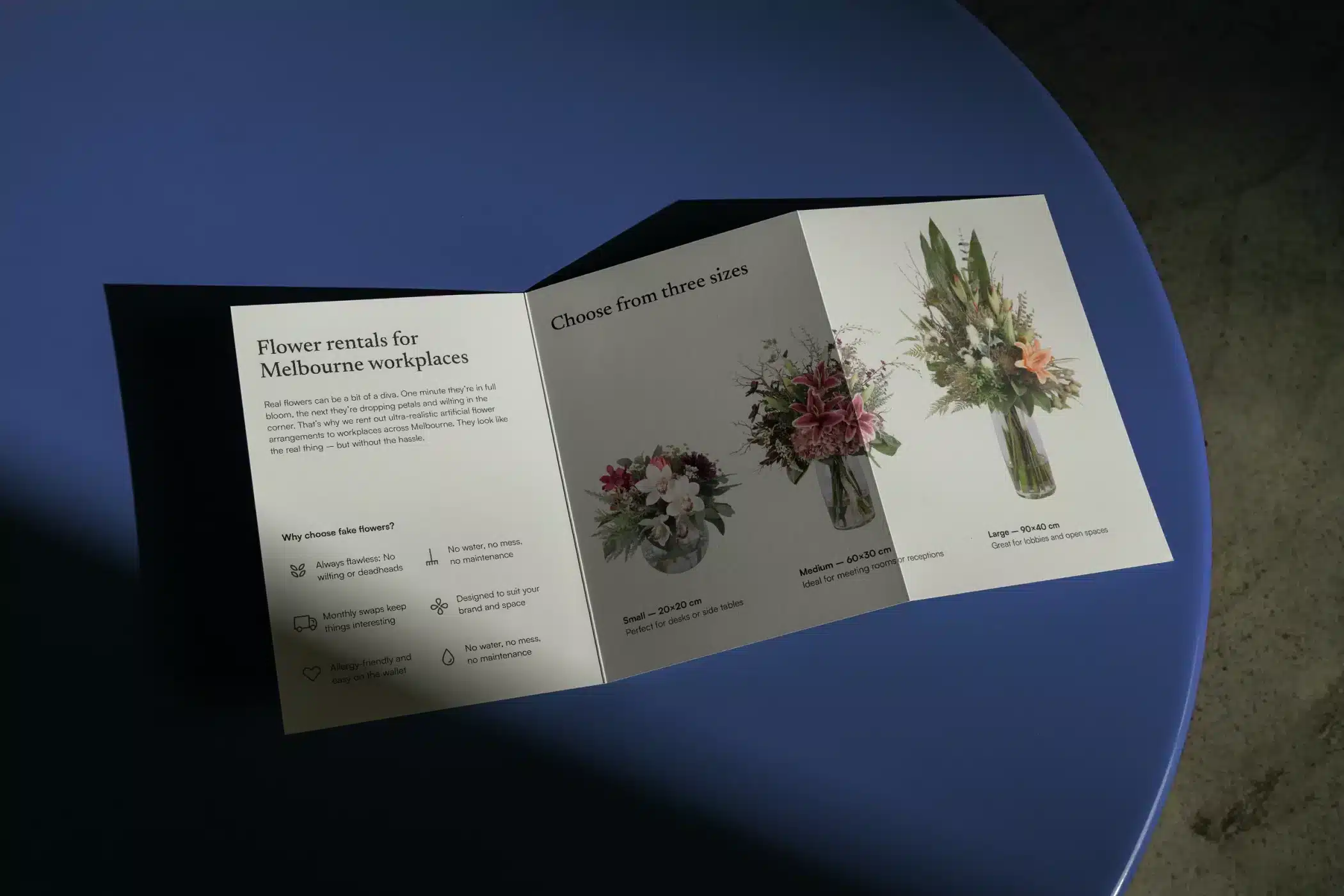
Title image: Brochure designed for my client Office Flower Solutions